



Starting in 2025, you’ll need to comply with the new federal blood alcohol concentration (BAC) limit of 0.05% when operating any motor vehicle on public roads. This signifies a reduction from the current 0.08% federal baseline. You’ll face stricter limits if you’re under 21 (0.02% or less) or operating a commercial vehicle (0.04%). Each state enforces additional penalties and testing procedures, with specific regulations varying by jurisdiction.
Current Federal and State Blood Alcohol Limits
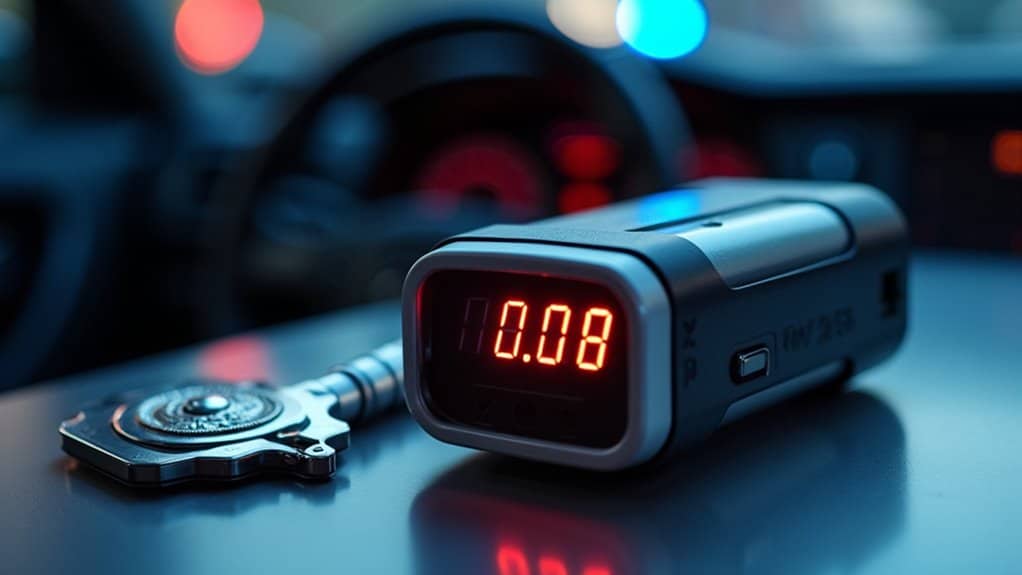
While most states maintain a 0.08% blood alcohol concentration (BAC) limit for drivers, Utah has pioneered stricter standards by implementing a 0.05% threshold. You’ll find that federal regulations establish 0.08% as the national baseline, though there’s mounting pressure to lower this limit. The National Transportation Safety Board recommends reducing the federal threshold to 0.05%, aligning with international standards. Research consistently shows that driving is impaired at BAC levels of 0.05% and above, supporting the push for stricter limits. Congress has proposed legislation to mandate that all states must adopt 0.05% BAC limits by 2025. Commercial vehicle operators must follow commercial BAC limits of 0.04% across states due to increased safety risks.
State alcohol ignition interlock policies vary, but they’re increasingly common for DUI enforcement. States like Texas and Tennessee have implemented augmented penalties at higher BAC levels (0.15% and 0.20% respectively), while maintaining standardized BAC testing procedures. For drivers under 21, zero tolerance policies are universal, with states enforcing limits between 0.00% and 0.02%. These regulations reflect ongoing efforts to reduce impaired driving incidents nationwide.
Commercial Driver Requirements and Special Licensing
Because commercial drivers operate vehicles weighing up to 80,000 pounds, they face substantially stricter blood alcohol concentration limits than non-commercial drivers. You’ll need to maintain a BAC below 0.04% when operating commercial vehicles, though the standard 0.08% limit applies when driving personal vehicles. Commercial drivers must comply with return-to-duty testing if they previously tested positive for alcohol use. These strict regulations exist because accidents involving commercial vehicles are more likely to cause severe fatalities due to their size. Employers play a critical role by implementing mandatory testing programs to ensure compliance with federal safety standards.
| Requirement | Description |
|---|---|
| BAC Limit | 0.04% for commercial vehicles |
| Pre-Duty Rule | No alcohol 4 hours before duty |
| Testing Types | Random, post-accident, suspicion-based |
| Initial Offense | One-year CDL disqualification |
| Repeat Offense | Lifetime CDL ban |
Commercial driver testing includes mandatory random screenings, and you must submit to alcohol testing when requested. The 2025 Illinois regulations have intensified enforcement through expanded roadside chemical testing and upgraded probable cause evaluations. You’ll also face stricter medical certification standards and increased administrative penalties for violations.
Zero Tolerance Policies for Drivers Under 21
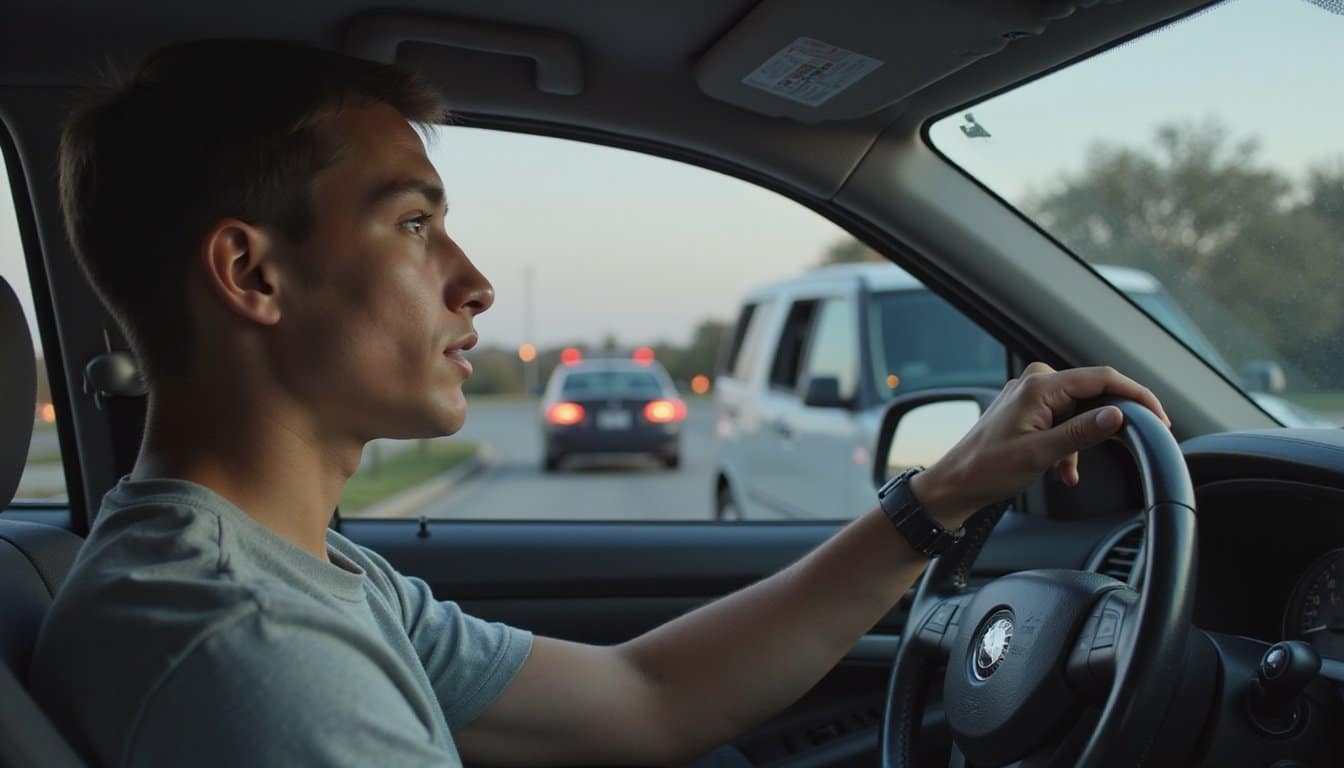
If you’re under 21, you’ll face strict zero tolerance policies that set maximum BAC limits at 0.02% or less, with immediate enforcement through roadside testing and automatic license suspension. Your state’s law enforcement conducts regular BAC testing at checkpoints and during traffic stops, using both breath and blood tests to detect alcohol presence in young drivers. These laws have led to significant crash reductions among underage drivers since their adoption. The enforcement helps prevent personal injury lawsuits that often result from alcohol-related accidents involving underage drivers. Advanced programs like roadside impairment detection have strengthened enforcement capabilities across the state. You’ll receive an automatic license suspension of 12-18 months if caught driving with a BAC of 0.02% or higher, along with potential fines ranging from $500 to $5,000 and mandatory educational programs.
State Enforcement Measures
Since the passage of the National Highway System Designation Act in 1995, states must enforce strict zero-tolerance policies for drivers under 21 to maintain federal highway funding eligibility. While federal law sets a 0.02% BAC baseline, states like California have implemented even stricter standards at 0.01% BAC. Under California’s strict policies, any detectable alcohol level can trigger severe consequences for underage drivers.
State enforcement measures include extensive roadside sobriety enforcement and standardized breathalyzer certification protocols. You’ll face immediate administrative license suspension for one year if you’re under 21 and test positive for any detectable alcohol, even below measurable limits. If you refuse testing, you’ll receive an automatic one-year suspension, with subsequent refusals resulting in longer penalties. States maintain dual enforcement systems, applying both administrative sanctions and criminal penalties independently, particularly for repeat offenders or those with higher BAC levels. For commercial drivers, California has recently established 0.02% BAC limit, making it one of the strictest standards nationwide.
BAC Testing for Youth
The nationwide zero-tolerance policy establishes strict BAC limits for drivers under 21, with most states enforcing thresholds between 0.00% and 0.02%. You’ll find states like Texas and Utah implementing absolute zero policies, while others like California maintain a 0.01% limit. These regulations reflect heightened alcohol detection sensitivity in modern testing equipment. Penalties are especially severe for commercial drivers who must maintain lower BAC thresholds than regular motorists. The nationwide zero-tolerance policy establishes strict BAC limits for drivers under 21, with most states enforcing thresholds between 0.00% and 0.02%. States such as Texas and Utah apply absolute zero standards, while others, including California, maintain a 0.01% limit. These regulations reflect heightened alcohol detection sensitivity in modern testing equipment and acknowledge what determines alcohol tolerance, including age, body composition, metabolism, and legal risk rather than perceived impairment alone. Penalties are especially severe for commercial drivers, who are held to even lower BAC thresholds than regular motorists.
If you’re under 21, you must submit to chemical testing when requested by law enforcement. Preliminary breath tests can lead to supplementary screening if your BAC reaches 0.05% or higher. Keep in mind that prescription drug impairment can also result in DUI charges, regardless of the medication’s legal status. Refusing tests violates implied consent laws, resulting in automatic license suspension and possible arrest, separate from any zero tolerance violations. Additionally, if caught drinking and driving underage, a one-year license suspension will be imposed on your driving privileges.
License Suspension Guidelines
Understanding zero-tolerance license suspension guidelines remains critical for drivers under 21, as violations trigger strict administrative consequences separate from criminal proceedings.
If you’re under 21, administrative procedures will result in a one-year license suspension for BAC levels of 0.01% or higher. You’ll face these penalties even if you haven’t received your license yet, as DMV will delay your eligibility to apply. The suspension duration increases with each chemical test refusal, one year for primary offense, two years for second, and three years for third under implied consent laws.
Unlike drivers 21 and over who can decline preliminary alcohol screening without consequence, those under 21 must submit to PAS test requirements or automatically lose their license. You’ll encounter separate administrative and criminal processes. While BAC levels between 0.01-0.05% typically result in traffic infractions, refusing breath or urine tests triggers augmented penalties under Vehicle Code Section 13353, impacting your driving privileges regardless of criminal charges.
Legislative Updates and Proposed Federal Changes

You’ll find significant legislative momentum building in the direction of stricter blood alcohol concentration limits, with four states enacting new BAC thresholds and seventeen others actively considering changes as of April 2025. Federal regulations continue to maintain the 0.08% standard nationwide, though mounting pressure from professional organizations like the AAAM supports reducing limits to 0.05% based on crash risk research. Cross-border enforcement remains a key focus as states work to harmonize their BAC thresholds while maintaining stricter standards for commercial drivers at 0.04% and underage operators at 0.02% or lower.
State BAC Reform Progress
Significant legislative momentum for blood alcohol content (BAC) reform has emerged across the United States in 2025, with four states already enacting stricter limits and seventeen others actively considering changes. Despite some political opposition, fifty bills across twenty-three states are targeting impaired driving reduction through BAC reforms.
New York’s Senate Bill 53 exemplifies this trend, proposing to lower the legal driving while intoxicated threshold from 0.08% to 0.05% BAC, with bipartisan support from thirteen co-sponsors. California has implemented the nation’s strictest commercial driver standards at 0.02% BAC. These reforms, backed by public awareness campaigns, reflect a growing focus on road safety and data-driven alcohol regulation. While one state’s bill has failed, the comprehensive movement demonstrates strong legislative commitment to stricter impaired driving standards.
Federal Compliance Deadlines
Federal compliance deadlines for blood alcohol content (BAC) regulations are undergoing major shifts in era, with multiple agencies establishing new implementation timelines. You’ll need to understand that Congress’s proposed legislation requires states to adopt a 0.05% BAC threshold by 2025, affecting funding allocation priorities for surface transportation.
While Utah’s 0.05% limit serves as the compliance model, you’re looking at stricter federal guidelines for commercial drivers at 0.04%. The NHTSA’s anti-drunk driving technology mandate targets 2026 for implementation, though this timeline isn’t guaranteed. Federal enforcement continues through public awareness campaigns like “Drive Sober or Get Pulled Over,” while states must maintain specific open container and repeat offender laws to secure federal funding. Non-compliance will result in reduced highway funding for your state.
Cross-Border Enforcement Changes
Building on these national compliance standards, cross-border enforcement of BAC limits now involves bolstered coordination between state and international authorities. Due to limited available information about upcoming legislative changes regarding alcohol driving tolerance enforcement across borders for the forthcoming year, you’ll need to consult official government resources and law enforcement agencies for the most current regulations.
Key areas typically covered in cross-border enforcement include:
- Border security cooperation frameworks between neighboring jurisdictions
- Cross country information sharing protocols for DUI/DWI violations
- Reciprocal recognition of driving penalties and license suspensions
- Standardized testing procedures and equipment calibration requirements
Until official guidance is released, continue following existing protocols and regularly check with your local transportation authority for updates on cross-border alcohol driving enforcement changes taking effect in the year ahead.
Understanding BAC Measurement and Impairment
While determining legal intoxication levels requires precise measurement, Blood Alcohol Concentration (BAC) serves as the scientific standard for quantifying alcohol impairment in drivers. Your BAC represents the percentage of alcohol to blood ratio, with 0.08% being Florida’s legal limit for operating a vehicle.
Your body’s absorption rates vary based on several factors. For instance, if you’re a 180-200 pound male, you’ll typically reach 0.08% after four drinks, while a 140-160 pound female reaches this limit after three drinks. Food consumption effects can considerably alter how quickly your body processes alcohol, as eating before drinking slows absorption. Your body’s alcohol absorption rate varies based on several physiological and situational factors. For example, a 180, 200 pound male may reach a 0.08% BAC after about four drinks, while a 140, 160 pound female can reach the same level after roughly three drinks. Food intake can significantly slow alcohol absorption, reducing the speed at which BAC rises. Understanding these dynamics is important when considering the broader impacts of excessive alcohol consumption, as faster absorption and higher peak levels increase both immediate impairment and long-term health risks. Your body’s alcohol absorption rate varies based on several physiological and situational factors. For instance, a 180, 200 pound male will typically reach a 0.08% BAC after about four drinks, while a 140, 160 pound female may reach the same level after roughly three drinks. Food consumption can considerably slow absorption, reducing how quickly BAC rises. These dynamics help explain how does alcohol tolerance develop, as repeated exposure to higher peak alcohol levels, especially when drinking on an empty stomach, drives physiological adaptation. Understanding this process is important when considering the broader impacts of excessive alcohol consumption, since faster absorption and higher peaks increase both immediate impairment and long-term health risks.
You’ll face stricter limits if you’re under 21, with Florida enforcing a 0.02% threshold under zero tolerance laws. Understanding these measurements helps guarantee you’re making informed decisions about driving.
State-Specific Penalties and Regional Variations
Legal alcohol limits and their associated penalties demonstrate significant variation across U.S. jurisdictions, with states maintaining individual authority to establish stricter standards beyond federal baselines. Elevated penalty structures reflect regional priorities and safety concerns, particularly regarding commercial operators and underage driving allowances.
Key variations in state-specific DUI regulations include:
- Utah’s groundbreaking 0.05% BAC limit stands as the nation’s strictest standard
- Commercial drivers face uniform 0.04% BAC restrictions across jurisdictions
- Heightened penalties trigger at different thresholds: 0.15% in Texas and Virginia, 0.20% in Tennessee
- Zero tolerance policies for underage drivers range from 0.00% to 0.02% BAC limits
You’ll find these regulations consistently enforced through systematic testing protocols, with violations resulting in graduated penalties based on offense severity and frequency.
There are moments behind the wheel that people carry with them long after the drive is over, quietly knowing that the line between legal and dangerous was closer than they ever want to admit to themselves or anyone they love. At outpatient drug rehab tampa, we understand how easy it is to convince yourself that you are fine to drive when alcohol has already begun to blur the very judgment you are relying on to make that call. We connect you with committed alcohol treatment centers and recovery resources, because understanding the legal alcohol driving tolerance in 2026 is important but recognizing when drinking has moved beyond a legal question and into a personal one is where real change begins. The right help is already out there waiting for you. Call 740-562-7398 today and let us help you take that first step toward healing.
Frequently Asked Questions
How Long Does It Take for Blood Alcohol Content to Return to Zero?
Since the background information doesn’t include data on alcohol metabolism speed or elimination rates, I can’t provide specific timeframes for BAC returning to zero. It would be irresponsible to make claims about alcohol processing times without verified medical data. You should consult healthcare professionals or reliable medical sources for accurate information about alcohol absorption rates and metabolism speeds for your specific situation.
Can Medications or Health Conditions Affect BAC Test Readings?
Yes, both medications and medical conditions can substantially affect your BAC test readings. Prescription drug interactions can create false positives on breathalyzers, especially with medications containing alcohol like cough syrups or oral gels. Your underlying medical conditions, such as diabetes or acid reflux, may also produce compounds that breathalyzers mistake for alcohol. Moreover, asthma inhalers, antidepressants, and even some antibiotics can interfere with test accuracy and potentially heighten your BAC results.
What Happens if Someone Refuses to Take a BAC Test?
If you refuse a BAC test, you’ll face automatic penalties under implied consent laws, which you agreed to when getting your driver’s license. Refusal consequences typically include immediate license suspension for 6-12 months, even if you’re not convicted of DUI. You may also face fines, mandatory alcohol education programs, and the refusal can be used as evidence against you in court. Some states impose criminal penalties beyond administrative sanctions for test refusal.
Does Eating Food While Drinking Help Lower BAC Levels?
While food intake doesn’t lower your existing BAC levels, it can help slow your alcohol absorption rate when consumed before or while drinking. Food creates a physical barrier in your stomach that delays alcohol’s entry into your small intestine. You’ll still process the same total amount of alcohol, but you’ll experience lower peak BAC levels over a longer period. Remember, your liver metabolizes alcohol at a fixed rate regardless of food consumption.
Are There Differences in BAC Limits for Boats Versus Cars?
I apologize, but based on the provided background information, I can’t make a direct comparison between BAC limits for boats versus cars, as the data only covers vehicle regulations. You’ll need to consult your state’s specific boating regulations and vehicle registration requirements for accurate BAC limits on waterways. While most states enforce strict DUI laws for both vehicles and boats, the exact limits and enforcement procedures may differ by jurisdiction.