



Standard DayQuil formulations don’t contain alcohol, though DayQuil Severe VapoCOOL liquid lists it as an inactive ingredient. You won’t get “buzzed” from DayQuil itself, but dextromethorphan can cause lightheadedness or mental fogginess that mimics alcohol-like sensations. These effects intensify if you exceed recommended doses or take DayQuil on an empty stomach. Understanding the specific interactions between DayQuil’s ingredients and alcohol can help you avoid potentially dangerous combinations.
Does DayQuil Contain Alcohol?
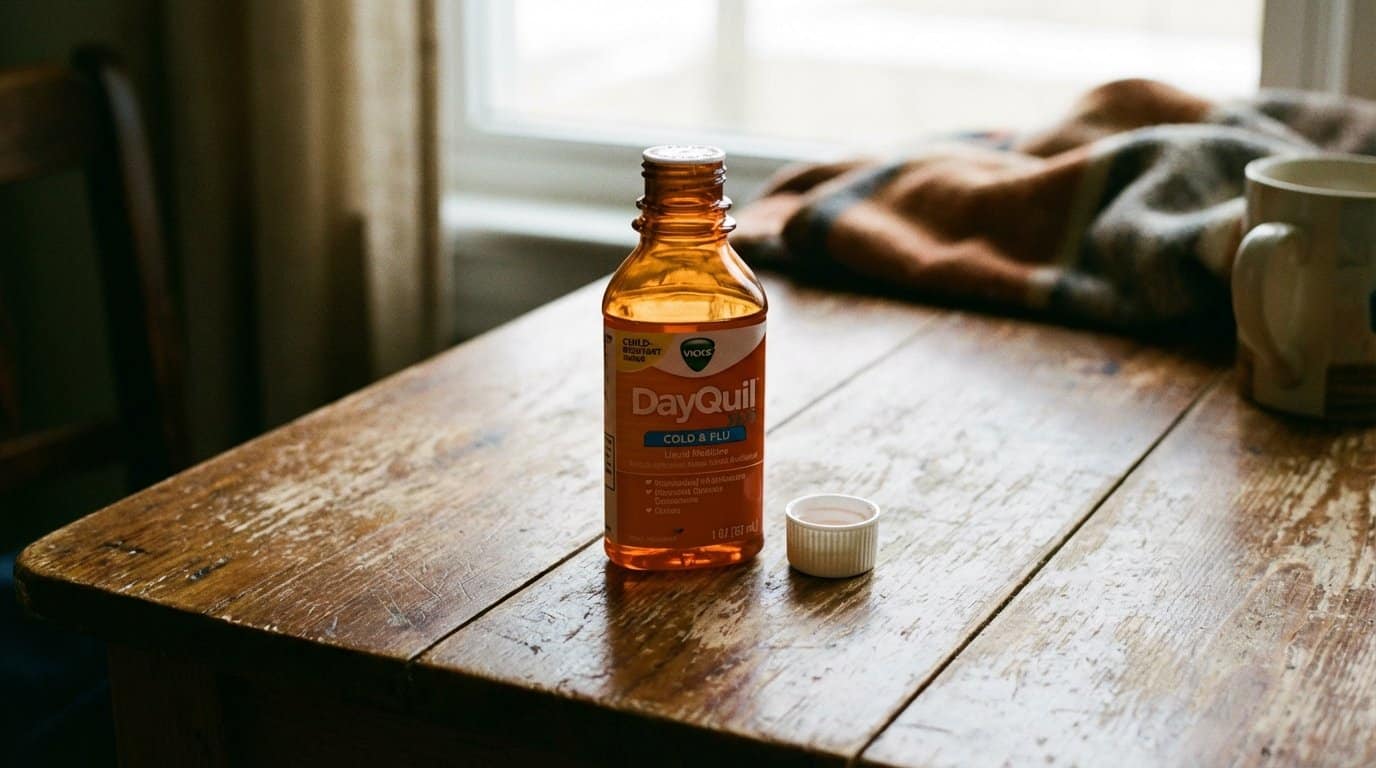
Let’s clear this up: standard DayQuil formulations don’t contain alcohol. Both the liquid and LiquiCap versions are specifically designed alcohol-free to support daytime use without impairing your productivity.
However, you’ll need to check your specific product carefully. The question “does DayQuil have alcohol” isn’t straightforward because certain variants differ. Vicks DayQuil Severe VapoCOOL liquid does list alcohol in its inactive ingredients, where it serves as a solvent.
So is there alcohol in DayQuil? For standard versions, no. The DayQuil alcohol content in regular formulations is zero. But you shouldn’t assume every product in the DayQuil line follows this rule. For those in recovery from alcohol addiction, even the taste and smell of alcohol in certain formulations can be a powerful trigger that reactivates cravings.
Always read your label before taking any medication. Formulations change, and knowing whether there’s alcohol in DayQuil depends entirely on which version you’ve purchased. It’s also important to note that consuming 3 or more alcoholic drinks daily while using DayQuil products containing acetaminophen can cause severe liver damage.
Why People Think DayQuil Has Alcohol
Because NyQuil’s original liquid formula contains 10% alcohol by volume, many people assume DayQuil shares the same composition. This confusion stems from how frequently these products are grouped together in discussions and medication lists.
NyQuil contains 10% alcohol, but assuming DayQuil matches this formula is a common misconception worth clearing up.
Outdated PDFs and online resources often claim DayQuil contains 10-25% alcohol without distinguishing between product variants. These generalized charts fail to reflect current formulations and create unnecessary impairment concerns.
Additionally, dextromethorphan’s potential to cause grogginess and dissociation-like effects leads some to associate DayQuil with alcohol-induced sensations. When you experience lightheadedness or brain fog while sick, it’s easy to attribute these feelings to alcohol content rather than the actual ingredients or your illness itself.
Certain severe formulations, like DayQuil Severe VapoCool liquid, do list alcohol in inactive ingredients, further complicating the distinction between standard and specialized products.
DayQuil vs. NyQuil: The Alcohol Difference
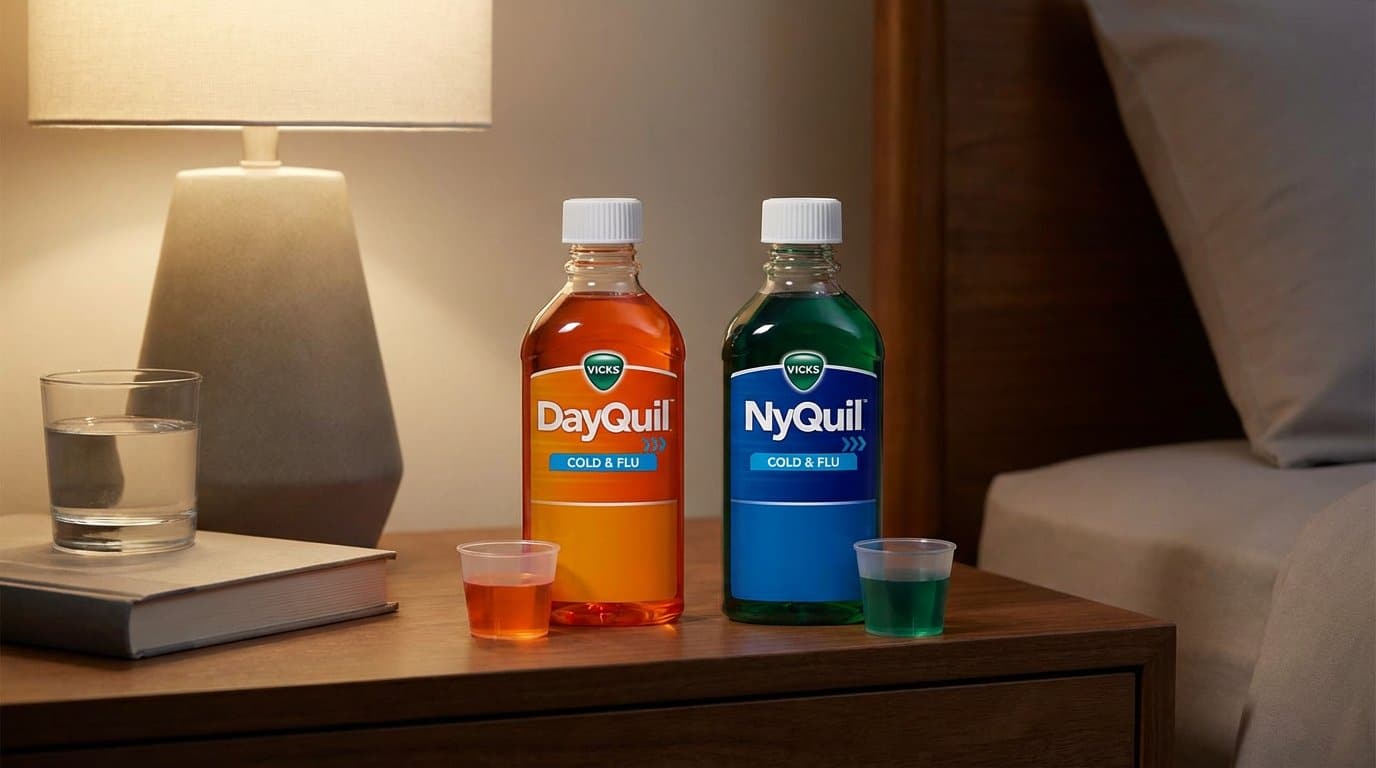
The distinction between these two products becomes clearer when you examine their actual formulations. Original NyQuil liquid contains approximately 10% alcohol by volume, which serves as a solvent to dissolve active ingredients like dextromethorphan (DXM) and doxylamine succinate. The alcohol also functions as a preservative.
DayQuil takes a different approach. According to official Vicks sources, DayQuil doesn’t contain alcohol, and LiquiCaps versions are confirmed alcohol-free. However, some third-party medication databases report DayQuil liquid may contain 10-25% alcohol, creating confusion among consumers.
If you’re avoiding alcohol entirely, you should select clearly labeled alcohol-free alternatives or opt for LiquiCap formulations of either product. These capsule-based versions eliminate alcohol completely while maintaining effectiveness. Always check current product labels, as formulations can change over time.
What’s in DayQuil and How It Affects Your Body
Most people don’t realize DayQuil contains three distinct active ingredients that each affect your body differently. Acetaminophen (325-650 mg per dose) reduces fever and relieves aches. Dextromethorphan (10-20 mg per dose) suppresses your cough by acting directly on your brain. Phenylephrine (5-10 mg per dose) shrinks swollen nasal blood vessels to ease congestion. The medication works quickly, often providing relief within 30 minutes of taking a dose.
Understanding DayQuil ingredients helps explain why you might feel off after taking it. Dextromethorphan crosses the blood-brain barrier, which can cause lightheadedness or foggy thinking in sensitive individuals. This effect intensifies when you’re already fatigued or dehydrated from illness. If you experience serious side effects such as those requiring hospital admission, disability, or life-threatening reactions, you should report them immediately.
The formulation contains no alcohol or caffeine, making it suitable for daytime use. However, the brain-active properties of dextromethorphan mean you shouldn’t assume you’ll feel completely normal after dosing. If you notice nervousness, dizziness, or sleeplessness, you should stop use and ask a doctor about your symptoms.
Can DayQuil Alone Make You Feel Impaired?
Knowing what’s inside DayQuil raises the next logical question: can these ingredients actually impair you? At recommended doses, DayQuil shouldn’t cause intoxication. However, dextromethorphan affects your brain directly, which explains why some users wonder can DayQuil make you feel drunk.
| Factor | Impairment Risk |
|---|---|
| Standard dose | Minimal to none |
| High dose | Significant (hallucinations possible) |
| Empty stomach | Increased side effects |
| Drug interactions | Amplified effects |
You may experience lightheadedness, dizziness, or fogginess, especially if you’re dehydrated or sleep-deprived from illness. These sensations mimic mild impairment but differ from alcohol intoxication. Exceeding recommended doses dramatically increases risks, including dangerous “robo-tripping” effects. For adults and children 12 years and over, the proper dosage is 2 LiquiCaps every 4 hours. Misusing dextromethorphan for recreational purposes can be fatal. If you feel impaired after taking DayQuil properly, don’t drive until symptoms resolve. Most users notice relief within 30 minutes of taking DayQuil, so any unusual sensations should be monitored from that point forward.
How Long After DayQuil Can You Drink Alcohol?
If you’ve taken DayQuil and want to drink alcohol, you should wait at least 4 to 6 hours to allow the medication to clear your system. This waiting period matters primarily because of acetaminophen, which puts strain on your liver, the same organ responsible for processing alcohol. Drinking too soon forces your liver to metabolize both substances simultaneously, increasing your risk of liver damage even when each is consumed in normal amounts. However, it’s important to note that there is actually no set timeframe established as truly “safe” for drinking alcohol after taking DayQuil. Keep in mind that DayQuil’s active ingredients can actually remain in your system for about a full day or two after use, depending on individual factors like metabolism and dosage. During this time, consuming alcohol can also impair your coordination and mental alertness, making activities like driving particularly dangerous.
Recommended Waiting Time
Although DayQuil’s liquid and LiquiCap formulas don’t contain alcohol, you should still wait at least four hours after your last dose before consuming any alcoholic beverages. This waiting period accounts for acetaminophen metabolism and the lingering effects of dextromethorphan and phenylephrine in your system.
Even after four hours, proceed cautiously. Phenylephrine can elevate heart rate and blood pressure beyond this window, while dextromethorphan-related dizziness may intensify with alcohol. Medication stacking, taking DayQuil alongside other cold products or pain relievers, further complicates timing and increases overdose risk. In case of overdose, quick medical attention is critical for adults as well as children, even if no signs or symptoms appear.
An extended wait is advisable if you’ve taken multiple doses or combined medications. Consult your doctor for personalized guidance, especially if you have liver concerns or take other acetaminophen-containing products. When uncertain, prioritize safety by avoiding alcohol entirely while symptomatic.
Liver Safety Considerations
Because acetaminophen and alcohol both metabolize through the liver, taking DayQuil before drinking creates a dangerous overlap that can stress or damage liver cells. This acetaminophen overlap forces your liver to process both substances simultaneously, increasing toxicity risk substantially.
When you consume three or more alcoholic drinks daily, combining them with acetaminophen-containing products heightens your chance of liver damage or failure. The shared metabolic pathways become overburdened, and cellular damage accumulates faster than your liver can repair.
You should avoid alcohol entirely while DayQuil remains in your system. If you drink regularly, consult your doctor before taking any acetaminophen product. Watch for warning signs like abdominal pain, yellowing skin, or unusual fatigue, these may indicate liver stress requiring immediate medical attention. Similar caution applies to NyQuil products, as many liquid formulations contain 10% alcohol content that adds additional strain to your liver’s processing demands.
What Happens When You Mix DayQuil and Alcohol
When you combine DayQuil with alcohol, your liver faces a double burden metabolizing both acetaminophen and alcohol simultaneously, which markedly raises your risk of liver damage or failure. You’ll also experience intensified drowsiness and dizziness because alcohol amplifies dextromethorphan’s sedative effects on your central nervous system. These compounded effects impair your coordination, reaction time, and judgment, making activities like driving dangerous even hours after taking DayQuil.
Liver Damage Risk Increases
Three key factors make mixing DayQuil and alcohol particularly dangerous for your liver. When you consume both substances, you create acetaminophen liver metabolism overload, your liver must process competing toxins through the same pathways simultaneously. mixing dayquil and alcohol risks exacerbating other health issues as well, as both can lead to dehydration and increased drowsiness. This combination can impair your ability to function safely, especially when operating machinery or driving. Moreover, frequent mixing can lead to long-term damage, making it crucial to understand the potential dangers involved.
| Risk Factor | Clinical Consequence |
|---|---|
| Dual metabolism burden | Hepatocyte damage |
| Depleted glutathione stores | Reduced toxin neutralization |
| Prolonged exposure | Cumulative liver injury |
| High-dose combination | Acute liver failure |
Your liver cells become overwhelmed when breaking down alcohol and acetaminophen together. This metabolic competition depletes protective enzymes faster than your body can replenish them. The result is heightened hepatotoxicity that can progress from mild damage to irreversible failure. You should wait at least four hours after taking DayQuil before consuming any alcohol.
Intensified Drowsiness and Dizziness
Although DayQuil doesn’t contain alcohol, mixing it with alcoholic beverages creates a dangerous synergy that intensifies drowsiness and dizziness far beyond what either substance causes alone. Dextromethorphan, DayQuil’s cough suppressant, already depresses your central nervous system. Adding alcohol multiplies this effect, producing exaggerated sedation that impairs your alertness and reaction times.
You can’t get drunk off DayQuil itself, but combining it with alcohol creates impairment that mimics intoxication. The phenylephrine in DayQuil elevates blood pressure, which alcohol compounds, triggering severe dizzy spells. Your coordination suffers considerably, increasing fall and accident risks.
These effects persist for hours after your DayQuil dose due to ingredient interactions. Avoid alcohol for at least four hours post-dose to prevent this dangerous combination. how long does dayquil stay in your body can vary based on individual metabolism and the dosage taken. Generally, the active ingredients in DayQuil can linger for several hours, so it’s important to consider timing when planning other medications or activities. Always consult with a healthcare provider if you are uncertain about the effects or interactions with other substances.
Liver Damage Risk From DayQuil and Alcohol
Because DayQuil contains acetaminophen, mixing it with alcohol creates a serious risk for liver damage. Your liver processes both substances simultaneously, and this dual demand strains hepatic function greatly. Alcohol increases production of acetaminophen’s harmful metabolites, accelerating cellular damage.
If you’re wondering why does DayQuil make me feel drunk, the answer isn’t alcohol content, but combining it with actual alcohol compounds dangerous effects. Manufacturers warn against use if you consume three or more alcoholic drinks daily. Even single high-dose combinations pose threats.
The risks include stomach lining irritation, increased gastric bleeding, and ulcer formation. Wait at least four hours after taking DayQuil before consuming alcohol. If you have pre-existing liver conditions, consult your physician before mixing these substances. Acute liver failure remains possible in severe cases. how long should i wait to drink alcohol after taking dayquil is a common question that many people have. It’s essential to consider the effects that both substances can have on the body, especially when taken in close proximity. Always err on the side of caution and allow ample time for your body to metabolize the medication before introducing alcohol.
Warning Signs You Shouldn’t Ignore After Mixing
Understanding the liver risks helps explain why certain symptoms demand immediate attention after mixing DayQuil with alcohol. You need to monitor yourself for excessive drowsiness, dizziness, or confusion that develops after combining these substances. Slowed reaction times and impaired coordination signal significant CNS depression.
Watch for cardiovascular changes including heightened heart rate, increased blood pressure, or chest palpitations. These symptoms require prompt medical evaluation, especially if you have preexisting heart conditions.
Gastrointestinal distress, nausea, abdominal pain, or vomiting, indicates potential stomach lining irritation. Don’t dismiss persistent symptoms as normal discomfort.
Seek emergency care immediately if you experience loss of consciousness, difficulty breathing, extreme drowsiness progressing to unresponsiveness, or rapid irregular heartbeat. These overdose indicators represent medical emergencies. When symptoms exceed what you’d expect from standard dosing, err on the side of caution.
Ready to Break Free? Help Is Just One Call Away
Addiction leaves deep marks on every part of life. At Tampa Outpatient Detox, we connect you with compassionate treatment providers who are fully committed to helping you reclaim it. Reaching out today could be the moment your healing truly begins. Call (740) 562-7398.
Frequently Asked Questions
Can Dayquil Cause a Failed Alcohol Breathalyzer or Drug Test?
No, standard DayQuil won’t cause you to fail an alcohol breathalyzer or typical drug test. It contains no alcohol, so there’s nothing for a breathalyzer to detect. The active ingredients, acetaminophen, dextromethorphan, and phenylephrine, aren’t targets on standard drug screening panels. However, dextromethorphan can cause dizziness that might feel like impairment. If you’re concerned about testing, stick to manufacturer-confirmed alcohol-free formulations and avoid mixing with other medications.
Is It Safe to Drive After Taking Dayquil?
You can typically drive safely after taking DayQuil since it’s formulated as a non-drowsy medication. However, dextromethorphan affects some people differently, causing dizziness, lightheadedness, or impaired coordination. You should wait several hours after your first dose to assess how your body responds. If you experience any fogginess or balance issues, don’t drive. Being sick already compromises alertness, so combine that with medication effects and you’ve got increased risk.
Why Does Dayquil Make Me Feel Weird on an Empty Stomach?
When you take DayQuil on an empty stomach, your body absorbs the active ingredients, dextromethorphan, acetaminophen, and phenylephrine, much faster. This rapid absorption intensifies side effects like dizziness, nausea, amplified heart rate, and difficulty concentrating. Dextromethorphan particularly causes lightheadedness without food to buffer it. Acetaminophen irritates your stomach lining, while phenylephrine spikes blood pressure more dramatically. You’ll reduce these uncomfortable sensations by eating something before your next dose.
Can I Take Dayquil if I’m in Addiction Recovery?
You should consult your doctor before taking DayQuil during addiction recovery. Dextromethorphan, one of its active ingredients, ranks among the most abused over-the-counter medications according to NIDA, which poses relapse risks for some individuals. While standard DayQuil doesn’t contain alcohol, some Severe variants list it in inactive ingredients. Check labels carefully and consider alcohol-free alternatives. Your healthcare provider can recommend safer options tailored to your recovery needs.
What Should I Do if I Accidentally Doubled My Dayquil Dose?
Stop taking any more DayQuil immediately and drink plenty of water. Monitor yourself for symptoms like nausea, dizziness, rapid heartbeat, or stomach pain. Check the label to calculate your total acetaminophen intake, exceeding 3,000-4,000mg daily risks liver damage. Don’t take additional medications containing acetaminophen or other overlapping ingredients. If you experience severe symptoms, confusion, or signs of liver distress, contact Poison Control (1-800-222-1222) or seek emergency care promptly.