







The Alkaloid Profile: Understanding Kratom’s Opioid-Like Effects
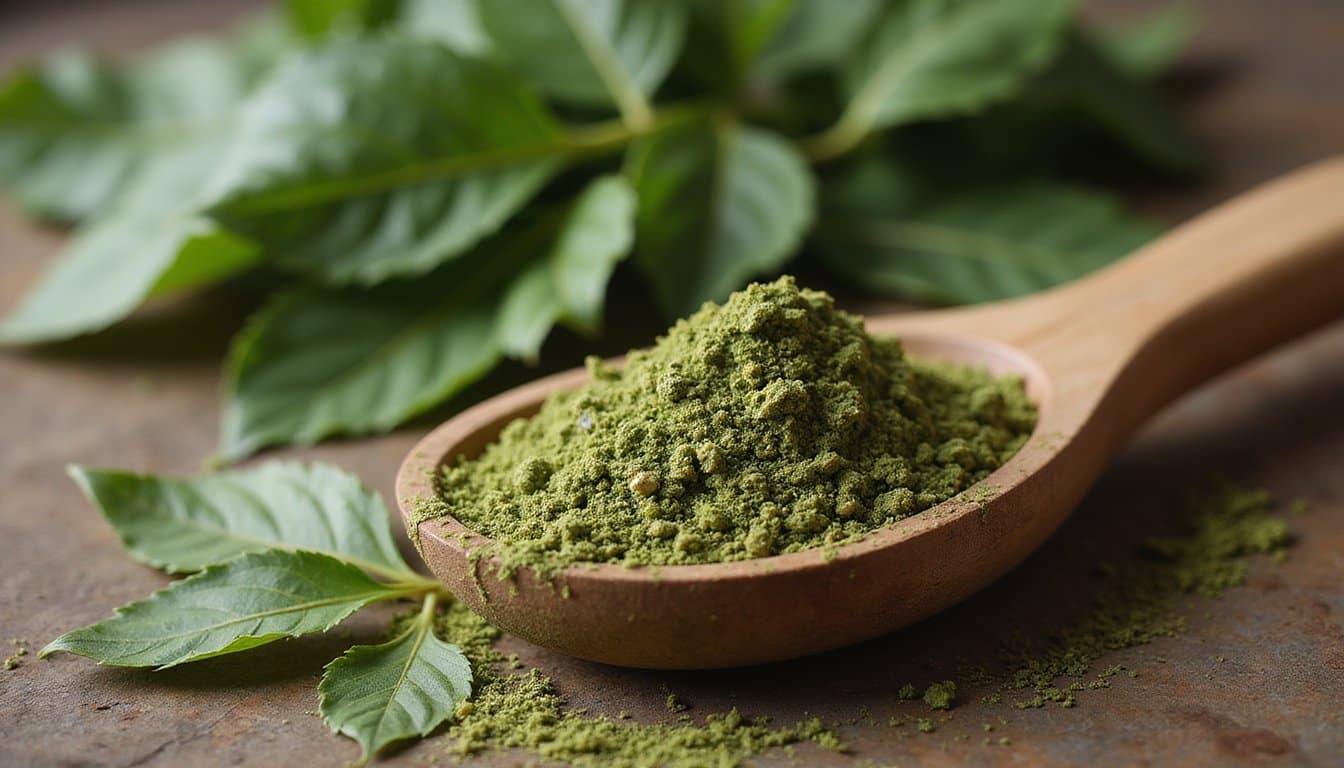
Kratom’s pharmacological effects stem primarily from two alkaloids that you should understand to grasp the plant’s addiction potential. Mitragynine, comprising two-thirds of kratom’s alkaloid content, exhibits moderate mu-opioid receptor affinity. However, 7-hydroxymitragynine, though less than 2% of total alkaloids, demonstrates 14 times greater potency at mu-opioid receptors than mitragynine itself.
Both alkaloids function as selective mu-opioid receptor agonists, producing dose-dependent effects ranging from stimulation to sedation. The alkaloid interactions you experience depend considerably on commercial product variability, genetic variation, growth conditions, and processing methods create inconsistent alkaloid profiles across kratom strains. Speciofoline, a known kratom oxindole alkaloid, varies significantly in peak area concentration across different commercial products, representing other minor alkaloids that further contribute to this chemical inconsistency. Regular kratom consumption may produce dependence with mild withdrawal, which underscores the importance of recognizing its habituation potential despite variations in alkaloid composition. These opioid-like mechanisms can trigger substance use disorder with prolonged use, as documented in observed cases of kratom-related dependence.
Critically, naloxone antagonizes kratom’s central analgesic effects, confirming opioid-mediated mechanisms. Understanding these receptor-binding profiles is essential for recognizing kratom’s legitimate addiction liability.
How Kava Works in the Brain and Body
Unlike kratom’s opioid-receptor mechanism, kava’s psychoactive effects involve a complex neurochemical profile centered on kavalactones, a class of lipid-soluble compounds that readily cross the blood-brain barrier and concentrate in brain tissue. You’ll experience anxiolytic and sedative effects primarily through kavalactone neurochemistry targeting your limbic system and amygdala.
The mechanism operates via multiple pathways. Kavalactones enhance GABA_A receptor function, amplifying inhibitory signaling that produces relaxation. Simultaneously, they inhibit monoamine oxidase-B and reduce norepinephrine reuptake, preserving alertness, distinguishing kava from alcohol or benzodiazepines. These six primary kavalactones account for the vast majority of kava’s neurochemical effects in the brain. Research on chronic kava users demonstrates no impairment in cognitive function despite heavy and long-term consumption patterns. Clinical evidence from multiple randomized trials shows kava maintains preserved or improved cognitive performance even with sustained use.
You’re also receiving modulation of voltage-gated ion channels and endocannabinoid CB1 receptors. EEG studies demonstrate dose-dependent shifts toward lower-frequency brain waves consistent with mild sedation, yet psychometric testing reveals preserved or improved cognitive performance, indicating you don’t experience the cognitive impairment associated with traditional depressants.
Substance Use Disorder Rates Among Kratom and Kava Users
You’ll encounter varying disorder prevalence rates depending on whether you’re examining kratom or kava use patterns, as epidemiological data suggests kratom shows higher dependence potential than kava, particularly at doses exceeding 5 grams daily and frequencies above three times per day. When you combine kratom and kava use, your addiction risk elevates substantially, a concern underscored by the positive association between kratom consumption and opioid misuse history, alongside polypharmacy patterns documented in fatal cases. Understanding these disorder severity differences is crucial, as you may face distinct clinical presentations and withdrawal profiles that require tailored intervention approaches. Researchers are still learning how often and to what extent kratom use leads to withdrawal or substance use disorder, indicating that comprehensive epidemiological understanding remains an ongoing area of investigation.
Kratom Disorder Prevalence Rates
Between 12% and 15% of U.S. adults who use kratom meet diagnostic criteria for kratom use disorder, with approximately 10-12% reporting definite withdrawal symptoms including cravings and insomnia. You’ll find that kratom abuse patterns emerge particularly among individuals with co-occurring substance use disorders, stimulant use disorder rates reach 16.5-fold higher in kratom users compared to non-users, while opioid use disorders show 18-fold elevation. The DAST-10 assessment reveals 21% of kratom users display substantial or severe substance abuse profiles, contrasting sharply with 1% among non-users. Kratom contains over 40 alkaloids with mitragynine and 7-hydroxymitragynine serving as the primary psychoactive compounds responsible for its dose-dependent effects. Long-term health impacts remain understudied, though poison center calls related to kratom misuse surged over 1,800 cases between 2011-2017. FDA warnings have highlighted the risks associated with unapproved kratom products, reinforcing concerns about product safety and quality control in the kratom market. These prevalence rates underscore kratom’s significant addiction potential despite its natural origin.
Kava Use Disorder Severity
While kratom shows substantial addiction potential with 12, 15% of U.S. adult users meeting diagnostic criteria for use disorder, kava presents a markedly different epidemiological profile. You’ll find that severity differences between these substances are striking: only 7.4% of kava users meet any use disorder criteria, with the vast majority experiencing no symptoms. When disorder does occur, you’re more likely to encounter mild-to-moderate cases rather than severe manifestations. The kava addiction burden remains comparatively low, evidenced by rare severe presentations, only two individuals in surveyed populations met criteria for severe kava use disorder. These severity differences suggest kava carries substantially lower abuse liability than kratom, though clinical vigilance remains warranted for vulnerable populations. Kava’s lipid-soluble kavalactones are rapidly absorbed in the gut but have low bioavailability, which may contribute to its lower addiction potential compared to other botanical substances. Frequent kava users may experience withdrawal-like symptoms that complicate cessation efforts and warrant medical supervision during detoxification. Co-use of both substances was associated with higher proportions of certain SUD symptoms, indicating that concurrent consumption may increase risk profiles beyond single-substance use.
Co-Use Addiction Risk Elevation
The substantial overlap between kratom and kava user populations, with 40.3% of a clinical sample reporting lifetime use of both substances, creates a distinct epidemiological concern.
When you combine these substances, you’re facing amplified addiction risk. Co-users endorsing kratom SUD criteria report extensively greater tolerance development and escalating consumption patterns than kratom-only users. This synergistic effect complicates both clinical assessment and treatment implications. The FDA has warned consumers about deaths connected to kratom use, underscoring the serious health consequences that can accompany these substances.
Key risk factors you should understand:
- 38.1% of kava/kratom co-users meet past-year kratom SUD criteria
- Co-use intensifies tolerance and dosage escalation (p=0.011)
- Polydrug burden increases psychiatric comorbidity rates
- Harm reduction strategies must address multi-substance interaction effects
- Treatment protocols require individualized assessment of substance-specific dependencies
- Among kratom users specifically, 31% have at least one SUD, demonstrating the substantial addiction potential even in single-substance use scenarios
- Kava’s lower addiction liability contrasts sharply with kratom’s substantial SUD prevalence, yet co-use patterns reveal compounded risk trajectories that warrant clinical vigilance.
Evidence suggests co-use patterns demand specialized intervention approaches beyond single-substance frameworks.
Why the “Natural” Label Creates a False Sense of Security

You’re likely unaware that regulatory gaps allow manufacturers to market kratom products without standardized potency testing or mandatory addiction warnings, creating a perception of safety that contradicts clinical evidence. When you encounter the “natural” label on these beverages, you’re not protected by the quality controls applied to pharmaceutical drugs, potency can vary dramatically between batches, making dosing unpredictable and dependency risk difficult to assess. Your brain interprets plant-based compounds as inherently safer than synthetic ones, yet the mitragynine in kratom binds to opioid receptors with the same neurochemical consequences as morphine, regardless of its botanical origin. Users have reported escalating consumption from single doses to multiple bottles daily, demonstrating how intense physical dependence develops despite the product’s natural marketing positioning.
Regulatory Gaps Enable Marketing
Because regulatory frameworks differ considerably between markets, manufacturers exploit these inconsistencies to market functional beverages with minimal substantiation. You’re exposed to unverified wellness claims that circumvent stricter UK regulations by targeting US permissive policies and self-regulatory gaps. This creates limited brand differentiation beyond superficial natural positioning.
Key vulnerabilities you should recognize:
- Absence of standardized ingredient potency requirements across jurisdictions
- Social media marketing bypasses traditional retail oversight mechanisms
- Healthcare pro influence remains underutilized in compliant communications
- Clinical efficacy claims lack mandatory third-party validation
- Regulatory voids permit niche health claims (sexual, cognitive) without evidence
You’ll notice brands strategically position products in wellness channels rather than groceries, exploiting classification ambiguities. Until healthcare professionals gain greater marketing integration and regulatory harmonization strengthens, you’re traversing an environment where natural labeling masks inadequate safety and efficacy substantiation.
Potency Varies Without Standards
While kava and kratom products carry botanical credentials that suggest consistent, mild effects, their actual potency varies dramatically across commercial formulations, a gap that regulatory absence hasn’t addressed. Traditional teas contain 0.5, 1.5% alkaloids, yet concentrated shots reach 5, 15%, multiplying psychoactive strength several-fold. You’ll find strain names like Maeng Da marketed as “natural step-ups” without standardized alkaloid specifications. Most products don’t list precise mitragynine or kavalactone percentages per serving, making potency identification nearly impossible. Duration scales with concentration too, shots deliver effects lasting 6, 8+ hours versus 3, 4 hours for brews. This variability, compounded by absent potency standardization, obscures pharmaceutical-level effects behind “herbal” labeling, preventing you from accurately evaluating dose and dependence risk.
Perception Overshadows Clinical Evidence
The “natural” designation on kava and kratom beverages functions as an implicit safety claim that clinical evidence doesn’t support. You’re exposed to unrealistic advertising promises positioning these drinks as wellness lifestyle enhancers rather than psychoactive substances. This marketing framing systematically obscures documented risks of dependence and withdrawal.
Your perception diverges sharply from clinical reality:
- Kratom acts on opioid receptors, yet you likely view it as a benign herb
- Natural health claims minimize associations with sedative dependence despite GABA-receptor targeting
- You may interpret “natural alternative” as synonymous with “non-addictive”
- Recovery communities disproportionately adopt these products, underestimating cross-addiction potential
- Shelf placement alongside soft drinks reinforces false everyday safety assumptions
This perception, evidence gap leaves you vulnerable to substance-like use patterns masked by botanical branding.
Withdrawal Symptoms and Physical Dependence
As regular kratom consumption alters your brain chemistry, stopping abruptly can trigger a withdrawal syndrome that mirrors opioid dependence. You’ll likely experience symptoms within 12-48 hours of your last dose, with peak intensity occurring on days 2-3. Expect anxiety, insomnia, nausea, muscle aches, sweating, and tremors during the acute phase lasting 1-7 days.
Your withdrawal severity correlates directly with your dose and consumption duration. Long term dependence develops because kratom binds to opioid receptors in your brain, creating tolerance and rebound effects when you stop. While some mild symptoms resolve in 3-5 days, others persist longer. Medical detoxification considerably reduces both withdrawal intensity and relapse risk compared to home-managed cessation, making professional intervention essential for safe discontinuation.
The Dangerous Synergy of Co-Use
Beyond the individual risks of kratom dependence lies a more complex hazard: combining these botanicals with other substances dramatically amplifies their neurological effects.
When you mix kava and kratom with alcohol, benzodiazepines, or opioid medications, you’re layering depressants that compound central nervous system impairment and loss of coordination. This polydrug effect creates unpredictable outcomes:
- Combined CNS depression intensifies oversedation and impaired alertness
- Cognitive function deteriorates with worsened attention and reaction time
- Multi-receptor reinforcement loops strengthen addictive patterns
- Drug-drug interactions complicate clinical management and risk recognition
- Progression from experimental use to problematic consumption accelerates
Marketing these botanicals as alcohol alternatives encourages polysubstance use in social settings. You may underestimate individual doses while remaining unaware of cumulative pharmacological interactions, masking dangerous oversedation and withdrawal complications that undermine sobriety goals.
Health Complications and Serious Medical Outcomes
While kratom and kava’s pharmacological profiles create addiction risks, you’re also facing serious medical dangers that extend beyond dependence. Hepatotoxic interactions pose significant concerns, kratom and kava both trigger liver injury ranging from acute hepatitis to complete organ failure. You’re at heightened risk if you have concurrent disease states, particularly existing hepatic dysfunction, where additive toxicity becomes life-threatening.
Beyond liver damage, you’ll encounter neurologic complications including seizures, confusion, and psychotic manifestations. Cardiovascular effects like hypertension and respiratory depression emerge, especially during polysubstance use. These aren’t theoretical risks: poison center data documents over 3,400 kratom exposures, including deaths, while kava prompted FDA warnings following 25 severe hepatotoxicity cases.
Your medical outcomes can demand hospitalization or transplantation, making these substances far riskier than their “natural” marketing suggests.
Product Quality, Potency Variation, and Contamination Risks
The absence of FDA regulation means you’re purchasing kratom and kava products with no standardized quality assurance, potency verification, or contamination screening, leaving you vulnerable to unpredictable health outcomes that extend far beyond the marketed wellness claims.
Unregulated kratom and kava products lack standardized quality assurance, potency verification, and contamination screening, exposing consumers to unpredictable health outcomes beyond marketed claims.
Without supply chain oversight, you’re exposed to:
- Heavy metals and salmonella contamination from unregulated manufacturing
- Unpredictable mitragynine and 7-OH alkaloid concentrations causing dose-dependent effects
- Concentrated kava formulations amplifying sedation and cognitive impairment risks
- Cross-contamination hazards in combined kratom-kava products
- Adulterants mimicking stronger substances, heightening abuse potential
Quality assurance protocols don’t exist in the commercial kratom-kava market. Products sold in convenience stores and vape shops harbor pathogens and contaminants linked to liver toxicity and seizures. Individual potency variations make consistent dosing impossible, escalating dependence risk when you increase consumption seeking predictable effects.
Current Regulatory Gaps and Future Research Needs
Three critical vulnerabilities undermine your protection as a kratom and kava consumer: federal agencies acknowledge these botanicals’ abuse potential yet haven’t implemented standardized scheduling, state and local authorities operate under conflicting regulations that leave most users unprotected, and manufacturers face no mandated labeling requirements disclosing addiction risks or alkaloid concentrations.
These regulatory policy implications create knowledge gaps. You’d benefit from controlled human abuse-liability studies clarifying each alkaloid’s pharmacological profile and addiction potential. Longitudinal research tracking shifts from casual use to diagnosable substance use disorders remains absent, particularly among young adults frequenting ethnobotanical bars. Co-use epidemiology needs systematic investigation to determine whether kava and kratom produce synergistic dependence effects. Until researchers establish evidence-based frameworks and policymakers implement uniform federal oversight, you encounter incomplete risk information when consuming these products.
Believing you were making a healthy choice, only to find yourself needing it just to feel normal, is one of the most disorienting realizations a person can face. At medical detox in tampa fl, we understand how confusing it feels when something marketed as a natural wellness drink turns out to have a grip that is anything but, and how much courage it takes to admit that self-care quietly became dependence. We connect you with reputable Kratom Detox Programs and treatment centers staffed by professionals who know that addiction does not care whether something came from a plant or a pharmacy. Call 740-562-7398 today and let us help you take that first step toward healing.
Frequently Asked Questions
Can Kava and Kratom Interact With Prescription Medications I’m Currently Taking?
Yes, kava and kratom can interact profoundly with your prescription medications. They inhibit enzymes that metabolize many drugs, creating potential contraindications with antidepressants, antipsychotics, and blood pressure medications. You’ll face heightened side effect risks, including serotonin syndrome, respiratory depression, and cardiovascular instability. These interactions become especially dangerous with CNS depressants and polypharmacy regimens. You shouldn’t combine these botanicals with prescriptions without consulting your healthcare provider first, as interactions remain clinically unpredictable and potentially serious.
Is Kratom Use During Pregnancy Linked to Health Problems in Newborns?
Yes, kratom use during pregnancy’s linked to significant newborn health problems. You’re exposing your baby to neonatal abstinence syndrome (NAS), causing withdrawal symptoms within days of birth. Your fetal development concerns include intrauterine growth restriction and small-for-gestational-age births in some cases. Maternal health risks involve kratom dependence, complicating pregnancy management. Affected newborns typically require hospitalization and pharmacological treatment. Healthcare providers strongly recommend avoiding kratom throughout pregnancy due to these documented adverse outcomes.
How Do I Know the Actual Alkaloid Content in My Kratom Product?
You’ll need a third-party certificate of analysis (COA) from an accredited lab using validated chromatographic methods like UPLC-DAD or LC-MS. Verify the lot number matches your product’s packaging. The COA should list specific mitragynine and 7-hydroxymitragynine values in mg/g. Without testing documentation, you’re facing unknown alkaloid concentration variance. Reputable vendors prioritize product quality testing; absent COAs indicate unverified potency claims.
What Percentage of Kava Users Develop Substance Use Disorder Compared to Kratom?
You’re substantially less likely to develop kava use disorder (7.5%) compared to kratom use disorder (38.1%). Kava shows minimal withdrawal symptoms associated with discontinuation and low physiological dependence potential. However, when you combine both botanicals, your kratom disorder risk rises to 44.1%, suggesting cross tolerance between kava and kratom may intensify problematic use patterns and complicate cessation efforts.
Are There Specific State-Level Restrictions on Kratom Availability in My Region?
You’ll need to verify your state’s kratom legality, as regulations vary extensively. If you’re in Alabama, Arkansas, Indiana, Rhode Island, Vermont, or Wisconsin, kratom’s banned entirely. Other states permit sales under Kratom Consumer Protection Acts requiring age verification and testing standards. You should prioritize obtaining lab-tested kratom products from compliant retailers to guarantee safety and purity. Check your local municipality’s ordinances too, as some cities impose additional restrictions despite statewide legality.