



You turn to alcohol when stressed because it augments GABA and releases dopamine, creating immediate relaxation and temporary relief from anxiety. However, 58% of drinkers who use alcohol to manage daily pressures face a dangerous trade-off, chronic use rewires your brain‘s stress response systems, making distress harder to tolerate without drinking. This creates a cycle where self-medication worsens underlying mental health conditions, increasing dependence. Breaking free requires understanding why this pattern develops and uncovering adaptive coping strategies that address the root causes.
Understanding the Prevalence of Drinking to Cope With Stress
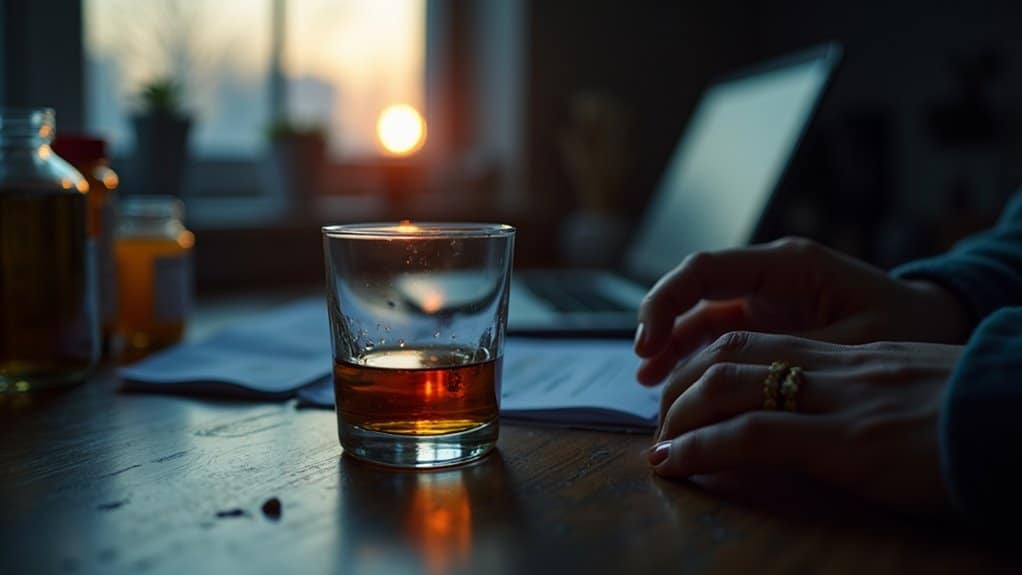
Drinking to cope with stress is far more common than many people realize. 58% of drinkers between youth and maturity use alcohol to manage day-to-day pressures, while 38% have turned to drinking to forget their problems and 47% to lift themselves out of a bad mood. These prevalence rates of drinking to cope with stress reveal how deeply embedded this behavior is across demographics, with 41% reporting they drink because it helps when feeling depressed or nervous. What begins as occasional relief can quickly become a stress drinking habit, 29% of adults have started or increased their alcohol use due to stress. This pattern crosses gender lines uniformly and intensifies among those facing financial hardship, making coping-related drinking a widespread public health concern that affects millions daily. Research shows that students whose drinking spiked most on high-stress days had the highest rates of alcohol problems, demonstrating how stress-driven drinking patterns can escalate into more serious issues. Concerningly, 54% of those who drink when experiencing depression or nervousness do so at increasing levels of risk, indicating that emotional drinking often exceeds safe consumption guidelines. Studies reveal that drinking to cope motivation predicts future alcohol problems even beyond how much a person actually consumes, suggesting that the underlying motivation matters as much as the quantity.
The Science Behind Why Alcohol Provides Temporary Relief
When you drink alcohol, it directly alters your brain chemistry by enhancing GABA (your brain’s calming neurotransmitter) and suppressing glutamate (its excitatory counterpart), creating immediate feelings of relaxation and reduced anxiety. This biochemical shift explains why alcohol feels like such effective stress relief in the moment, it genuinely does lower your nervous system’s activation and dampen emotional distress. Alcohol also stimulates dopamine release in the brain’s reward pathways, which reinforces the behavior by creating pleasurable sensations that your brain learns to associate with drinking. The release of dopamine particularly increases in the nucleus accumbens, a critical reward center that strengthens the connection between drinking and pleasurable feelings. Over time, your brain’s paraventricular nucleus of the thalamus becomes hyperactive, creating a powerful circuit that links alcohol not to pleasure, but to relief from withdrawal discomfort and stress. However, these same neurochemical changes that provide temporary comfort also set in motion a cascade of adaptations that conclusive, definitive, or final worsen anxiety, disrupt emotional regulation, and reinforce the very coping pattern you’re trying to escape.
Alcohol’s Anxiolytic Effects Explained
Alcohol’s reputation as a quick fix for anxiety isn’t just perception, it’s rooted in measurable neurochemical changes that occur within minutes of consumption. The activation of cAMP/PKA signaling in the amygdala directly reduces anxiety-like behaviors by increasing neuropeptide Y expression, which calms threat responses. Additionally, amygdala disruption by alcohol impairs your brain’s ability to differentiate between real and perceived threats, lowering vigilance and fear. The extended amygdala plays a crucial role in both generating anxiety-like behaviors and mediating the stress-dampening effects of alcohol consumption.
- Dopamine pathway activation in your striatum boosts reward signaling and diminishes avoidance behaviors
- Narrowed cognitive focus (alcohol myopia) limits your attention to immediate cues, blocking worry about future threats
- Epigenetic modifications in neural circuits alter anxiety regulation at the molecular level
These mechanisms explain why you feel relief, but they also reveal why dependence develops when your brain adapts to externalized emotional regulation. Individuals with higher baseline anxiety and risk-avoidance tendencies experience the greatest reduction in anxious behavior after alcohol consumption, with the relief intensity correlating to their pre-existing avoidance levels. However, this temporary anxiolytic effect comes with a significant cost: alcohol consumption increases the risk for depression development by nearly fivefold, creating a dangerous cycle of self-medication.
Temporary Relief vs. Long-Term Harm
Within minutes of your initial sip, alcohol triggers a cascade of neurochemical changes that genuinely reduce your experience of emotional and physical pain. Studies show alcohol at 0.08% BAC reduces pain ratings by approximately 25% while enhancing GABA activity to produce calming effects and releasing dopamine to boost mood. This temporary relief feels real because it is, but it’s fundamentally unsustainable.
The long-term harm emerges as your brain adapts to repeated exposure. Chronic use rewires your stress response systems, making future distress harder to tolerate without alcohol. Your natural emotion regulation mechanisms deteriorate, replaced by conditioned dependency. What began as effective short-term relief evolves into a cycle where alcohol becomes necessary just to feel baseline normal, increasing risks of depression, anxiety, and physical health complications. Chronic high-dose exposure leads to brain changes that impair your behavioral and cognitive flexibility, making it increasingly difficult to adapt to new situations or solve problems without alcohol. Research has shown that alcohol’s stress-reducing effects depend heavily on situational factors, including whether distractions are present during the stressful event and the timing of when drinking occurs relative to the stressor. Historically, alcohol served as a predecessor to modern anesthetics, with surgeons performing rapid amputations on patients in a drunken stupor before safer alternatives became available.
The Connection Between Mental Health Conditions and Alcohol Use
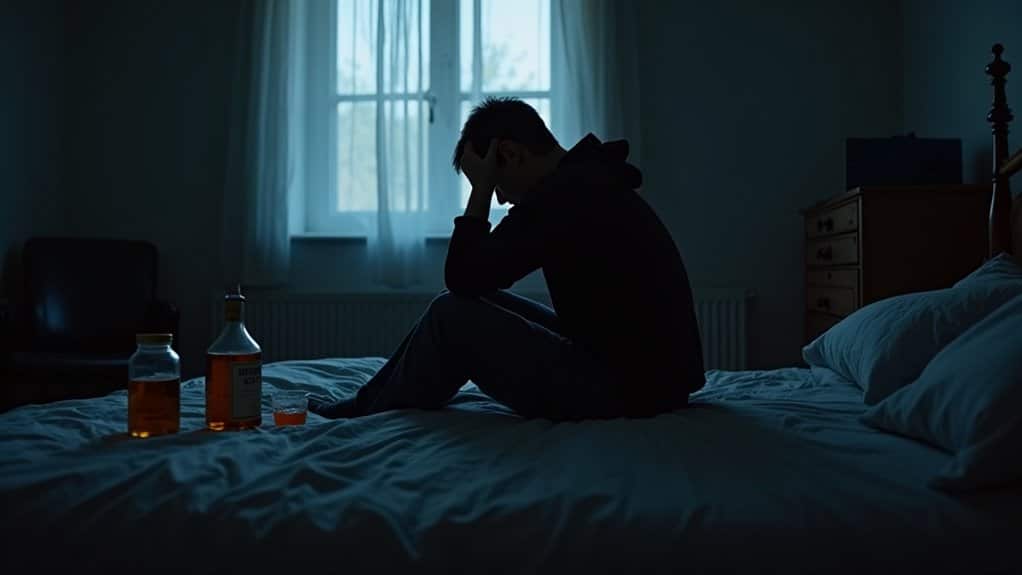
Mental health conditions and alcohol use exist in a complex, reinforcing relationship that affects millions of people. Around 25% of U.S. adults with serious mental illness experience alcohol dependence, often beginning as self-medication with alcohol to manage overwhelming symptoms. This creates an anxiety drinking cycle where temporary relief actually worsens your underlying condition.
What feels like relief today becomes the burden of tomorrow, alcohol and mental illness feed each other in an endless loop.
Key patterns in this connection include:
- Depressive and anxiety disorders show the highest co-occurrence rates with alcohol use disorder, affecting 27-40% of individuals
- Bipolar disorder has up to 42% co-occurrence in clinical populations
- PTSD and trauma-related conditions frequently trigger alcohol use as emotional avoidance
The critical challenge? Alcohol-induced symptoms often mimic or worsen psychiatric conditions, making it difficult to identify which came before and complicating your treatment and recovery path. The relationship between mental illness severity and alcohol problems is well-documented, with percentage of respondents showing alcohol dependence or abuse varying significantly by their level of mental illness in the past year. Regular heavy drinking is particularly linked to depression symptoms, and stopping drinking can often relieve these depressive symptoms. Treating both conditions simultaneously significantly improves your likelihood of recovery compared to addressing either issue alone.
How Social and Cultural Factors Normalize Drinking as Stress Relief
You’re exposed to powerful messages every day that frame alcohol as the natural antidote to workplace stress and life’s challenges. From after-work drinks being treated as team-building rituals to media depictions that consistently show characters reaching for a bottle after a hard day, these cultural scripts teach you that drinking is how adults cope. The alcohol industry deliberately targets specific populations through marketing strategies focused on African Americans, Latinos, American Indians, youth, and other groups with tailored advertising campaigns. These normalized patterns shape your beliefs about stress relief long before you consciously decide whether alcohol fits into your own life.
Workplace Drinking Culture Norms
These norms shape your drinking behavior in three critical ways:
- Permissive environments increase heavy drinking by 45, 62% compared to discouraging workplaces
- Supervisors consume more alcohol than non-supervisory employees, modeling problematic patterns
- Leadership quality matters, supportive, fair management reduces team alcohol consumption
Organizational leadership and alcohol culture directly influence whether you turn to drinking as stress relief, making workplace norms a powerful factor in your coping mechanisms.
Media Portrayal of Alcohol
Beyond workplace culture, the broader media terrain powerfully shapes how you perceive alcohol as a stress management tool. The media portrayal of alcohol consistently links drinking with glamour, relaxation, and social success, 71% of prime-time shows feature alcohol use, yet fewer than 25% address negative consequences. Alcohol advertising strategies invest over £1 billion annually in campaigns that equate drinking with celebration and comfort, rarely mentioning addiction or health risks. On social media, 40% of profiles reference alcohol use, with exposure to alcohol-related content correlating with increased consumption. These repeated positive portrayals normalize drinking as an emotional solution, reinforcing the belief that alcohol relieves stress. Emerging counter-narratives promoting sobriety challenge this conditioning, but dominant messaging still frames drinking as essential for coping and connection.
The Cycle of Dependence: When Coping Becomes Addiction

Something subtle shifts the initial time alcohol relieves emotional pain, a mental note forms that drinking works. Your brain’s reward center encodes this lesson, strengthening the connection between distress and drinking. Over time, alcohol coping triggers, certain places, emotions, or social cues, automatically spark cravings, even when you’re not consciously upset.
This progression unfolds predictably:
- Binge/reward stage: Alcohol temporarily numbs pain, reinforcing its use through dopamine activation
- Withdrawal/negative affect stage: You drink to escape anxiety, irritability, and emotional discomfort rather than for pleasure
- Compulsion stage: Prefrontal cortex impairment reduces self-control; drinking becomes involuntary despite consequences
Emotional addiction to alcohol emerges when your brain’s stress systems overactivate and reward pathways weaken. You’re no longer choosing to drink, you’re driven by neurobiological changes that persist long after the glass empties.
Warning Signs That You’re Using Alcohol as a Coping Mechanism
Recognizing the warning signs that alcohol has become your primary coping tool is essential for early intervention and recovery. If you find yourself reaching for a drink primarily during moments of emotional distress such as after a conflict, disappointment, or stressful day, you’ve likely crossed from occasional use into emotional dependency. When you need alcohol to relax, unwind, or feel “normal,” and your consumption consistently increases under stress, these patterns signal that alcohol is no longer a choice but a conditioned response to emotional discomfort.
Drinking During Emotional Distress
Many people turn to alcohol when emotions feel unbearable, creating a pattern that can quietly shift from occasional relief to automatic response. Emotional drinking often emerges during periods of sadness, anxiety, anger, or loneliness, times when you feel least equipped to manage distress. Research shows that heightened emotional distress directly increases both drinking frequency and quantity, with patterns intensifying during or after traumatic events.
You might notice:
- Drinking specifically triggered by negative feelings rather than social occasions
- Escalating consumption during stressful periods, requiring more alcohol to feel relief
- Feeling unable to manage difficult emotions without reaching for a drink
Coping with emotional pain without drinking requires recognizing these patterns early. When alcohol becomes your primary emotional regulator, you’re likely bypassing healthier strategies that build genuine resilience and emotional strength.
Needing Alcohol to Relax
When you find yourself unable to unwind after a difficult day without pouring a drink, you’ve crossed a critical threshold. This reliance signals that alcohol as a coping mechanism has become your default stress-relief strategy, replacing healthier alternatives you once used. You might justify it by thinking “I need a drink to calm down,” but this ritualistic pattern reveals using alcohol to cope rather than genuinely enjoying it.
Your brain reinforces this habit through increased GABAergic activity and dopamine release, creating pleasurable relief that strengthens automatic associations between stress and drinking. You’ll notice diminished ability to relax without alcohol, drinking primarily alone after stressful events, and escalating consumption as your tolerance builds. When alcohol becomes unavailable, irritability and anxiety intensify, revealing how dependent your emotional regulation has become.
Increased Consumption Under Stress
Your drinking pattern transforms dramatically when stress enters your life, and this change serves as one of the most telling warning signs that alcohol has become your primary coping mechanism. Research shows a 13, 24% increase in heavy-drinking days with each additional stressor, revealing how trauma and alcohol use interconnect during difficult periods.
Notice these critical escalation patterns:
- Stress-triggered episodes: Your drinking coincides specifically with emotional distress rather than social occasions
- Increased frequency and quantity: Heavy-drinking days multiply during challenging times, while moderate drinking remains unchanged
- Motivation shifts: You’re drinking primarily for emotional regulation rather than enjoyment
Job loss, legal troubles, and major life events particularly amplify stress-driven consumption. When alcohol becomes your automatic response to discomfort, you’re reinforcing a negative cycle that prevents developing healthier coping skills.
The Long-Term Mental Health Consequences of Drinking to Cope
Over time, drinking to numb emotional pain doesn’t just mask distress, it fundamentally rewires your mental health in damaging ways. Depression and alcohol coping create a reinforcing cycle where symptoms intensify, increasing your risk of major depressive disorder, anxiety, and bipolar conditions. What begins as temporary relief escalates baseline anxiety, impairs cognitive function, and weakens your ability to regulate emotions naturally.
Coping with trauma without alcohol becomes increasingly difficult as dependence deepens, inhibiting genuine healing and worsening trauma symptoms. Your relationships suffer through escalating conflicts and isolation, while withdrawal phases intensify the very emotions you’re trying to escape. This pattern drastically raises your risk for alcohol use disorder, co-occurring psychiatric conditions, and in severe cases, suicidality, underscoring why addressing emotional pain directly is essential for recovery.
Why Maladaptive Coping Increases Your Risk of Relapse
If you’re relying on avoidance, emotional suppression, or other maladaptive coping strategies, you’re setting yourself up for a markedly higher risk of relapse. These ineffective patterns fail to address the psychological reasons for drinking, leaving you vulnerable when stress resurfaces. Instead of relying on these short-term fixes, it’s crucial to explore the underlying psychological reasons for substance use. Engaging in therapy or support groups can help illuminate these issues, providing healthier coping mechanisms.
Reduced trigger resistance, Without problem-focused strategies, you’re more exposed to craving-provoking situations and less equipped to handle them effectively.
Eroded self-efficacy, Poor coping diminishes your confidence in managing urges, making the abstinence violation effect (“one drink means total failure”) more powerful.
Heightened psychological distress, Anxiety and depression intensify without adaptive skills, creating internal pressure that pushes you in the direction of alcohol.
Developing healthier approaches to coping without alcohol strengthens your resilience and reduces relapse vulnerability substantially.
Building Adaptive Coping Strategies to Replace Alcohol Use
Replacing alcohol with adaptive coping strategies requires deliberate skill-building that targets the specific situations, emotions, and thought patterns that previously triggered your drinking. Rewiring coping responses begins with personalized assessment of your triggers and strengths, then building a broad repertoire of problem-solving skills, distraction techniques, and drink refusal strategies. Evidence shows each adaptive response reduces immediate drinking risk by 30% in high-risk moments.
Replacing alcohol coping with healthy habits involves practicing “waiting out the urge,” cognitive restructuring to challenge cravings, and mindfulness to increase trigger awareness without reactivity. Resilience-building modules that strengthen optimism, self-regulation, and mental agility greatly decrease relapse rates. Social support networks provide vital motivation, while acceptance-based approaches foster long-term effectiveness. Individualized, scaffolded planning around daily routines and lifestyle modifications, including exercise, sleep, and non-drinking activities, creates sustainable recovery pathways. Integrating these strategies not only cultivates healthier coping mechanisms but also equips individuals with the essential skills for overcoming addiction.
Professional Treatment Options and Support Resources
When alcohol has become your primary coping mechanism, professional treatment offers structured, evidence-based pathways that self-directed efforts alone often can’t provide. Therapy for alcohol coping, including cognitive behavioral therapy and motivational amplification, addresses the underlying emotional pain driving your drinking patterns while building healthier responses to distress.
Professional treatment provides evidence-based pathways to address underlying emotional pain and build healthier coping strategies beyond alcohol dependency.
Evidence-based treatment options include:
- Inpatient programs (90+ days) show 50% long-term sobriety rates, providing intensive support when alcohol dependency is severe
- Pharmacological interventions like naltrexone substantially reduce heavy drinking when combined with psychological support
- Outpatient therapy and support groups offer ongoing accountability and emotional resilience building for sustained recovery
Though relapse is statistically common, 75% within the initial year, continuous engagement with professional support dramatically improves your long-term success in replacing alcohol with adaptive coping strategies.
Nobody plans to need alcohol just to get through the day, but pain has a way of quietly turning a temporary escape into the only way you know how to survive what life keeps throwing at you. At outpatient drug rehab tampa fl, we understand how much courage it takes to look honestly at why alcohol became your coping mechanism and how terrifying it feels to consider facing everything you have been numbing without it by your side. We connect you with committed alcohol treatment centers and recovery resources, because stopping the cycle of using alcohol to cope is not about willpower alone it is about finally having the right tools and the right people helping you build a life where you no longer need to escape it. The right help is already out there waiting for you. Call 740-562-7398 today and let us help you take that first step toward healing.
Frequently Asked Questions
Can Occasional Drinking to Unwind Lead to Alcohol Dependence Over Time?
Yes, occasional drinking to unwind can progress to dependence over time. When you repeatedly use alcohol for stress relief, your brain’s reward pathways reinforce this behavior, increasing habit formation risk. Your vulnerability grows with frequency, quantity, genetic predisposition, and underlying mental health conditions. If you’re drinking to cope rather than for social enjoyment, or noticing you need more alcohol to relax, these are warning signs. Early intervention and developing healthier coping strategies can prevent this progression effectively.
How Long Does It Take to Rewire the Brain After Stopping Alcohol?
Your brain begins healing within days, but significant rewiring takes 3, 6 months for stabilized mood and cognition, with deeper recovery continuing up to two years. Neuroplasticity allows your brain to form healthier pathways as you maintain sobriety. Recovery speed depends on your drinking history, lifespan, general wellness, and mental wellness. Supporting your healing through quality sleep, nutrition, therapy, stress management, and consistent sober habits accelerates brain restoration and strengthens new neural connections.
What Are the Best Immediate Alternatives When Craving Alcohol During Stress?
When stress triggers alcohol cravings, try these immediate alternatives: take a brisk 10-minute walk to release endorphins, practice deep breathing (like the 4-7-8 technique) to calm your nervous system, or call a trusted friend for support. You can also engage in a cognitively demanding task, puzzles, reading, or journaling, to redirect your focus. These strategies interrupt the stress-drinking cycle and help you build healthier coping patterns over time.
Can Medications Help Reduce the Urge to Drink for Emotional Relief?
Yes, medications can considerably reduce your urge to drink for emotional relief. Naltrexone blocks alcohol’s rewarding effects and decreases cravings, while acamprosate helps maintain abstinence by reducing withdrawal discomfort. Emerging treatments like GLP-1 agonists show promise in lowering alcohol cravings too. These work best when combined with therapy to address underlying emotional pain. Talk to your healthcare provider, medication can be a potent tool in breaking the cycle of emotional drinking and building healthier coping skills.
How Do I Explain My Alcohol Recovery to Friends Who Drink Socially?
Be honest and direct about your recovery, framing it around personal health and growth rather than judgment of their choices. Use simple phrases like “I’m not drinking right now, it’s better for my well-being” to set clear boundaries without confrontation. Suggest alternative activities to maintain connection, and recognize that true friends will respect your decision. If they’re uncomfortable, that often reflects their own relationship with alcohol, not your worth or choices.