



Despite its name, tusi rarely contains cocaine. You’re actually getting a pink-dyed cocktail, usually ketamine and MDMA, often bulked with caffeine. The name comes from “2C” (2C-B), not cocaine, though 2C-B’s rarely present. There’s no standardized recipe, so batches vary wildly and can hide stimulants, opioids, or cathinones. That unpredictability makes dosing a gamble and can increase the risk of overdose and other serious adverse effects.
Key Takeaways
- Tusi is a pink-dyed powder marketed as “pink cocaine” that typically contains little or no actual cocaine.
- The name “tusi” comes from the phonetic pronunciation of “2C,” referencing 2C-B, though 2C-B is rarely present.
- Its primary components are usually ketamine and MDMA, often bulked with caffeine and other variable additives.
- Originating in Colombia around 2018, it spread through European and US nightlife and club scenes.
- With no standardized recipe, batches vary unpredictably, raising overdose risks from dose uncertainty and possible opioid or stimulant contamination.
What is tusi (pink cocaine)

Tusi is a pink-dyed powder drug whose name misleads almost everyone who encounters it. Despite being called “pink cocaine,” it typically contains little or no actual cocaine. The name “tusi” comes from the phonetic pronunciation of “2C,” referencing the synthetic hallucinogen 2C-B, yet genuine 2C-B is rarely present. Instead, you’re most likely looking at a designer drug cocktail built primarily from ketamine and MDMA, often bulked with caffeine. Batches may also contain methamphetamine, cocaine, synthetic cathinones, or prescription opioids, with no standardized recipe. Manufacturers color the mixture with pink food dye and sometimes add strawberry flavoring for a sweet aroma. Originating in Colombia around 2018, tusi has since spread through Europe and the US, appearing substantially in nightlife and club scenes.
Why pink cocaine usually contains no cocaine at all
Pink cocaine usually contains no cocaine because the name is marketing, not chemistry. The name “tusi” doesn’t come from cocaine at all. It’s a phonetic rendering of “2C,” referencing the synthetic hallucinogen 2C-B. That linguistic origin got muddled as the drug spread from Colombia around 2018, and “Pink Cocaine” stuck as a marketing label rather than an accurate description.
When you encounter tusi, you’re typically getting a base of ketamine and MDMA, often bulked with caffeine. Drug-checking studies worldwide confirm these two compounds as the primary components. Cocaine appears only occasionally, and even genuine 2C-B is rarely present.
What’s actually in it (often ketamine, MDMA, and other drugs)

This substance typically contains ketamine and MDMA, often bulked with caffeine to increase volume. Laboratory drug-checking studies consistently identify these as the primary components. Because there’s no standardized recipe, what you find in any given batch depends entirely on who made it. Beyond that base, you might encounter a range of unpredictable additives:
No standardized recipe means no predictable batch. The same pink powder rarely delivers the same chemical profile twice.
- Stimulants: methamphetamine, cocaine, and synthetic cathinones, which drive tachycardia, hypertension, and agitation.
- Depressants and opioids: benzodiazepines, oxycodone, and other prescription opioids, raising respiratory depression and overdose risk.
- Hallucinogens and fillers: LSD, mescaline, ephedra, and lidocaine, alongside pink dye and strawberry flavoring.
You can’t predict potency or interactions from appearance alone. Since formulations vary batch to batch, the same pink powder rarely delivers the same chemical profile twice.
Why every batch is different and unpredictable
Every batch is different and unpredictable because no governing body regulates what goes into tusi, so each batch reflects the improvised choices of whoever mixed it. Without a standardized recipe, you’re consuming whatever compounds the maker had available, in whatever ratios they chose. Ketamine and MDMA dominate, but caffeine, methamphetamine, cocaine, synthetic cathinones, and opioids appear inconsistently across samples.
| Component | Frequency | Risk |
|---|---|---|
| Ketamine | Common | Cystitis |
| MDMA | Common | Hypertension |
| Opioids | Variable | Respiratory depression |
You can’t predict potency or composition from color, smell, or texture, since pink dye and strawberry flavoring mask everything. Two doses from the same dealer may contain entirely different actives. That variability means you’re gambling on each exposure, with overdose risk rising when unexpected opioids or stimulants concentrate unpredictably.
Why the unknown mixture makes overdose so likely
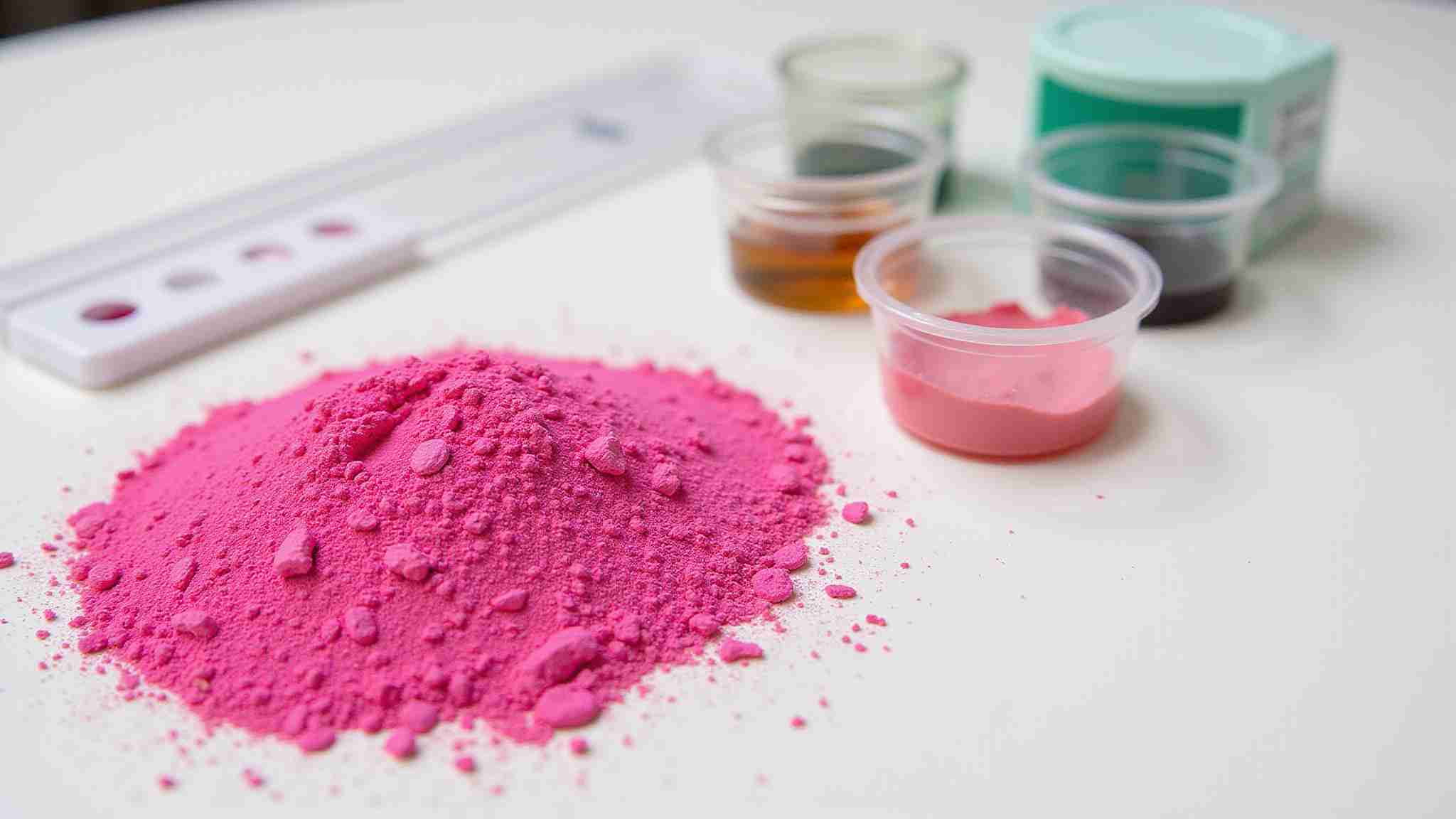
The unknown mixture makes overdose so likely because you can’t quantify what you’re taking, so you can’t dose safely. Each batch blends unmeasured ketamine, MDMA, caffeine, and often undisclosed methamphetamine, cocaine, or opioids. Without standardized potency, you’re guessing at exposure every time.
Three factors compound your danger:
- Opioid contamination: Undetected oxycodone or synthetic opioids trigger respiratory depression, especially alongside benzodiazepines or alcohol.
- Stimulant stacking: Combined MDMA and methamphetamine escalate tachycardia, hypertension, and cardiotoxicity risk.
- Dose uncertainty: No consistent recipe means one gram might contain lethal concentrations the next batch lacks entirely.
Because formulations shift constantly, your tolerance offers no protection. You can’t titrate safely against an unknown mixture, so accidental overdose becomes statistically probable, not exceptional.
Why the pink dye is just branding, not a safety marker
The pink dye is just branding because it comes from ordinary pink food dye, sometimes paired with strawberry flavoring, and it tells you nothing about what’s actually inside. Two batches sharing identical pink shades can contain wildly different combinations of ketamine, MDMA, caffeine, methamphetamine, cocaine, synthetic cathinones, or prescription opioids. The dye doesn’t indicate potency, purity, or ingredient ratios, so you can’t use appearance to gauge risk. Manufacturers exploit this branding to make the powder look trendy and consistent, masking a chaotic chemical reality. When opioid contamination hides beneath that cheerful color, respiratory depression and fatal overdose become invisible threats. Don’t mistake aesthetic uniformity for chemical consistency. The pink coating is purely cosmetic, never a safety guarantee.
How Tampa Outpatient Detox connects people to treatment
Tampa Outpatient Detox connects people to treatment through help identifying appropriate treatment options and connecting people with treatment providers, and targeted referrals. Because tusi’s composition varies unpredictably, often combining ketamine, MDMA, caffeine, and sometimes opioids or methamphetamine, you need an assessment that identifies exactly what’s affecting your body. Tampa Outpatient Detox helps you explore appropriate treatment options based on your needs and connects you with suitable providers.
Here’s how you get connected:
- Screening: You undergo drug testing to detect ketamine-related bladder damage, stimulant cardiotoxicity, or opioid dependency.
- Stabilization: Clinicians manage withdrawal, monitor cardiac and neurocognitive symptoms, and address contamination risks.
- Referral: You’re matched with counseling, medication-assisted treatment, or inpatient care as needed.
This continuum ensures you don’t navigate recovery’s chemical complexity alone.
Get Help for Tusi and Polysubstance Use
Tusi can expose you to an unpredictable mix of ketamine, MDMA, stimulants, or opioids, making every dose difficult to predict and increasing overdose risk. Tampa Outpatient Detox helps people concerned about pink cocaine addiction treatment and polysubstance use treatment explore supervised detox and continued recovery support based on the substances involved. Call 740-562-7398 to discuss treatment options.
Frequently Asked Questions
How Long Can Tusi Be Detected in Your System?
You can’t pin down one exact timeline because tusi’s a variable cocktail, not a single compound. Its typical bases clear differently: ketamine’s detectable in urine for 2-4 days, MDMA for 2-4 days, and caffeine within a day. If your batch contains methamphetamine, cocaine, or opioids, expect 1-4 days in urine, longer in hair (up to 90 days). Unpredictable formulations mean you can’t reliably estimate your own clearance.
Does Tusi Show Up on Standard Drug Tests?
Yes, but detection depends on tusi’s specific ingredients. Since tusi typically contains ketamine and MDMA, you’ll test positive for these on specialized panels, though standard drug tests don’t always screen for ketamine. If your batch includes cocaine, methamphetamine, or opioids, you’ll likely trigger positives on standard immunoassays. Because tusi’s composition varies unpredictably, you can’t reliably predict what’ll show up. Thorough testing catches more compounds than basic five-panel screens.
Can Tusi Become Addictive After Just a Few Uses?
You can develop dependency risk even after just a few uses, though it varies by batch. Since tusi typically contains ketamine and MDMA, plus possible methamphetamine, cocaine, or opioids, you’re exposing yourself to multiple addictive compounds simultaneously. Ketamine drives psychological dependence, while stimulants like methamphetamine trigger rapid reinforcement patterns. Because there’s no standardized formulation, you can’t predict which addictive substances you’re consuming, making early dependency both unpredictable and genuinely possible.
What Should You Do if Someone Overdoses on Tusi?
Call emergency services immediately. Tusi’s unpredictable mix of ketamine, MDMA, and possible opioids demands professional intervention. If you spot respiratory depression (slow, shallow breathing), administer naloxone, since opioid contamination’s common. Place them in the recovery position to prevent aspiration, and monitor for tachycardia, hyperthermia, or seizures from stimulant toxicity. Don’t leave them alone. Keep them cool if overheating occurs, and report every substance they’ve taken to responders for targeted treatment.
What Factors Affect the Street Price of Pink Cocaine?
“Street prices for tusi vary widely and are not a reliable indicator of its contents, potency, or safety. What you should know is that price tells you nothing about safety or contents. Since tusi’s typically a variable cocktail of ketamine, MDMA, caffeine, and sometimes methamphetamine, cocaine, or opioids, there’s no standardized potency or dosage. You’re paying for an unpredictable mixture, so you can’t gauge risk from cost alone.