





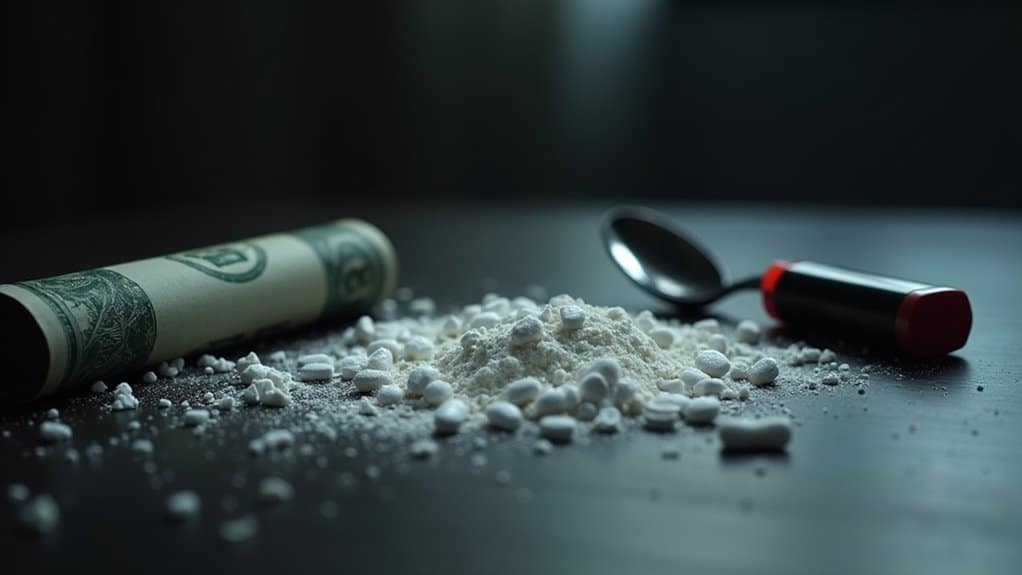

If you’re concerned about crack use, look for key indicators. Physically, you’ll notice dilated pupils, rapid heartbeat, muscle tremors, and burn marks on fingers or lips. Behaviorally, watch for rapid mood swings, insomnia, secretiveness, and an unexplained need for money. Psychologically, paranoia, hallucinations, and anxiety are common. You might also find glass pipes, lighters, or small plastic bags nearby. Recognizing these patterns early matters, and understanding what drives them can make all the difference.
Key Takeaways
- Physical signs: Dilated pupils, rapid heartbeat, muscle tremors, restlessness, and burn marks or blisters on the fingers and lips.
- Behavioral changes: Rapid mood swings, insomnia, secretive behavior, unexplained need for money, and rising absenteeism from responsibilities.
- Psychological symptoms: Paranoia, hallucinations, anxiety, difficulty focusing, and depression that may include suicidal thoughts.
- Appearance and health decline: Rapid weight loss, poor hygiene, skin sores, rotting teeth, and general lethargy.
- Paraphernalia and environment: Glass pipes, lighters, small plastic bags, burning-plastic smells, and neglected or disorganized living spaces.
What are the signs of crack use

Crack use shows through five observable categories: physical indicators, behavioral patterns, psychological symptoms, visible changes in appearance and health, and environmental clues.
Physically, you’ll notice dilated pupils, rapid heartbeat, hypertension, muscle tremors, and burn marks on fingers or lips. Behaviorally, watch for mood swings, insomnia, secretive conduct, an unexplained need for money, and rising absenteeism. Psychologically, you may observe paranoia, hallucinations, anxiety, difficulty focusing, and depression with possible suicidal ideation.
In terms of appearance and health, look for rapid weight loss, poor hygiene, skin sores, and rotting teeth. Environmentally, you’ll find glass pipes, lighters, small plastic bags, chemical odors, and disorganized spaces. These signs may raise concern about crack use, but they cannot confirm drug use on their own.
What behavioral signs to look for
Behavioral signs of crack use include rapid mood swings, insomnia, secretive behavior, an unexplained need for money, and increased absences from responsibilities. Mood swings cycle rapidly from euphoria to aggression, irritability, or paranoia. Watch for insomnia or extended periods of staying awake for days, which disrupts normal sleep cycles. Secretive behavior is common; the person avoids family and abruptly changes friend groups. You’ll also observe an unexplained need for money, leading to borrowing, stealing, or neglecting financial obligations. Track increased absences from work, school, or daily responsibilities, as these occur regularly with sustained use.
Documenting these patterns over time strengthens your assessment. No single sign confirms crack use, but a cluster of these behavioral changes, especially when paired with physical indicators, signals a problem that warrants intervention.
What physical signs and paraphernalia indicate crack use

Physical signs and paraphernalia give you concrete, observable evidence of crack use. Watch for dilated pupils that appear unusually large during and shortly after use. You’ll notice burn marks or blisters on fingers and lips from handling hot glass pipes. Muscle twitches, tremors, and restlessness signal central nervous system stimulation, alongside rapid heartbeat and hypertension. Examine personal spaces for glass pipes, lighters, and small plastic bags. Detect unusual smells resembling burning plastic or chemicals in rooms. Check makeup kits or hygiene products for hidden compartments used for storage. You may find missing household items or unexplained damage in living areas. Disorganized, neglected spaces often accompany these indicators. Together, these physical and environmental findings confirm what behavioral changes first suggest.
How the short, intense high drives a distinct pattern
Crack’s short, intense high drives a distinct pattern of compulsive redosing that quickly escalates into binging. Since the high lasts only minutes, users chase it with repeated dosing every 10 to 15 minutes as the euphoria collapses into a crash marked by lethargy, irritability, and craving. This cycle drives observable behavioral and physiological patterns you can recognize.
| Binge Phase | Observable Indicators |
|---|---|
| Active use | Dilated pupils, rapid heartbeat, restlessness |
| Crash | Depression, lethargy, intense craving |
You’ll see users stay awake for days, neglecting food, sleep, and responsibilities while pursuing the next hit. This obsessive dosing pattern depletes finances rapidly, explaining sudden borrowing or stealing. Recognizing the compressed dose-crash-redose cycle helps you distinguish crack use from substances producing longer, more sustained intoxication and slower behavioral decline.
What crack use does to mood and daily functioning

Crack use destabilizes mood and erodes daily functioning through a predictable oscillation between extremes. You’ll swing from euphoria to aggression, irritability, or paranoia within compressed timeframes, tracking the drug’s rapid rise and fall. Watch for insomnia or staying awake for days, which disrupts your normal sleep cycles and compounds emotional volatility. As the high fades, you’ll notice an inability to focus, lethargy, or spacing out. Your obsessive desire to smoke crack dominates your thoughts, crowding out work, school, and daily responsibilities. Expect increased absences and financial neglect as the compulsion escalates. With prolonged abuse, severe depression and suicidal ideations may develop. These mood disturbances aren’t incidental, they’re diagnostic markers reflecting how crack hijacks your neurochemistry and dismantles the routines that structure your life.
How to tell crack use from other stimulant use
You distinguish crack use from other stimulant abuse by focusing on route-specific indicators, since many symptoms overlap. Crack’s smoked, so you’ll see burn marks or blisters on fingers and lips, whereas cocaine’s snorted, producing nosebleeds and frequent sniffing. Look for glass pipes and lighters rather than rolled bills or residue-lined mirrors. The intoxication timeline differs too. Crack delivers an intense, brief high followed rapidly by crash, driving compulsive redosing and marathon wakefulness. Shared stimulant signs like dilated pupils, rapid heartbeat, hypertension, tremors, weight loss, and paranoia won’t reliably separate crack from methamphetamine or cocaine. Watch instead for crack lung syndrome, persistent cough, and burning-plastic odors in living spaces. When you combine paraphernalia, administration route, and symptom pattern, you’ll identify crack specifically.
How Tampa Outpatient Detox connects people to treatment
Tampa Outpatient Detox links you to structured treatment through a coordinated intake process. Tampa Outpatient Detox helps you explore appropriate outpatient detox options and connects you with licensed treatment providers based on your needs, then determine whether outpatient detox meets your needs or referral to a higher level of care is warranted. You’re matched to evidence-based interventions, including medically supervised withdrawal management and behavioral therapy targeting cravings. The team coordinates ongoing support, monitoring key signs and mental state throughout stabilization. If co-occurring depression or suicidal ideation emerges, you’ll receive integrated psychiatric care. This diagnostic, stepwise approach ensures you make a safe shift toward sustained recovery.
Recognize the Signs of Crack Use and Find Support
Burn marks, glass pipes, rapid mood swings, sleeplessness, paranoia, and repeated crash-and-redose cycles can all point to ongoing crack use. Tampa Outpatient Detox helps people concerned about crack cocaine use and crack addiction treatment explore supervised withdrawal support, behavioral care, and continued recovery planning. Call 740-562-7398 to discuss treatment options.
Frequently Asked Questions
How Long Can Crack Cocaine Be Detected in Your System?
Crack cocaine clears your system relatively quickly, but detection depends on the test used. You’ll typically test positive in urine for 1-4 days after use, though heavy or chronic use extends this to a week or more. Blood and saliva detect it for up to 1-2 days, while hair follicle testing reveals use for up to 90 days. Your metabolism, hydration, dosage, and frequency all influence these timeframes substantially significantly.
Are Medications Available to Treat Crack Addiction?
There’s currently no FDA-approved medication specifically for treating crack cocaine addiction. Your recovery relies primarily on behavioral therapies, including cognitive-behavioral therapy and contingency management, which show strong evidence for effectiveness. Doctors may prescribe medications to manage co-occurring conditions like depression, anxiety, or psychotic symptoms you’re experiencing. You’ll benefit most from combining structured therapy, support groups, and medical monitoring. Research continues, but you can’t rely on medication alone for lasting sobriety.
Can a Crack Overdose Happen After the First Use?
Yes, you can overdose the very first time you use crack. There’s no safe amount, and your body hasn’t built any tolerance. Crack stimulates your central nervous system, spiking your heart rate and blood pressure dangerously. You might experience rapid heartbeat, hypertension, tremors, or seizures. A first-time dose can trigger cardiac arrest, stroke, or respiratory failure. Individual sensitivity varies unpredictably, so overdose risk exists from your initial exposure onward.
What Withdrawal Symptoms Can Occur After Stopping Crack?
When you stop using crack, you’ll experience intense cravings, severe depression, and fatigue as your central nervous system readjusts. You’ll notice increased appetite, agitation, and vivid, unpleasant dreams disrupting your sleep. You may develop anxiety, paranoia, and difficulty concentrating during the crash phase. Suicidal ideation can emerge, so you’ll need medical monitoring. These symptoms typically peak within days but psychological cravings persist longer, requiring professional support for safe recovery.
What Is the Typical Cost of Crack Addiction Treatment?
Treatment costs vary widely based on the level of care you need. Treatment costs vary based on the level of care, program length, provider, and insurance coverage. Your insurance may cover a significant portion, and many centers offer sliding-scale fees or payment plans. You should verify coverage and explore state-funded options to reduce out-of-pocket expenses.