





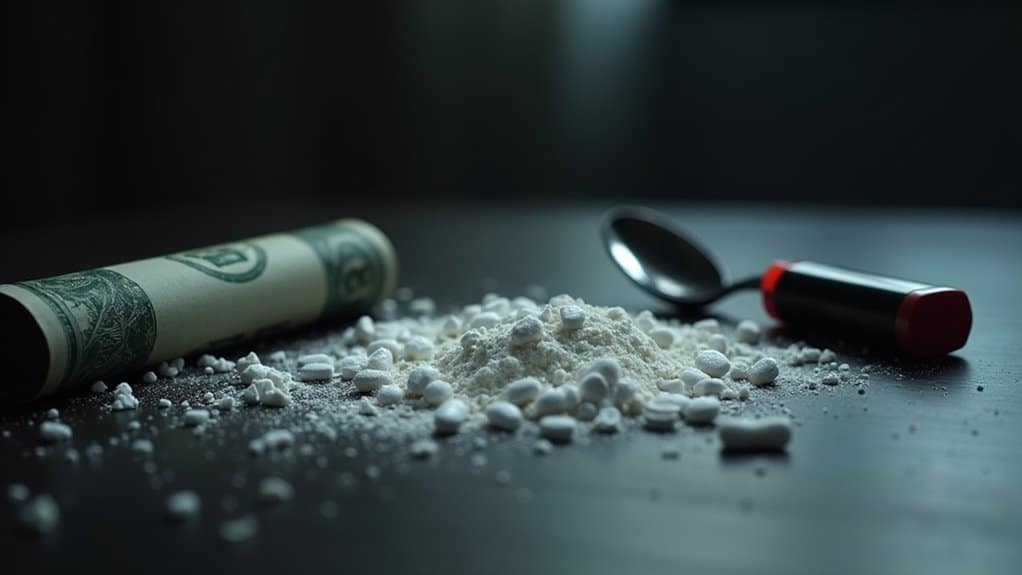

Methamphetamine is a powerful stimulant that’s chemically similar to amphetamine, but its effects are stronger and last longer. You’ll often see it as powder or crystals, ranging from blue and green to brown or yellow. Watch for signs like dilated pupils, extreme weight loss, “meth mouth,” and open sores from scratching. Short-term effects include intense euphoria, energy, and alertness lasting 6 to 12 hours. Understanding meth’s full impact can help you recognize when someone needs support.
Key Takeaways
- Meth appears as powder or crystals, ranging in color from blue and green to brown or yellow.
- Physical signs include dilated pupils, extreme weight loss, severe tooth decay (“meth mouth”), and open sores from scratching.
- Behavioral signs include aggression, paranoia, impulsive actions, social withdrawal, and erratic sleep patterns.
- Short-term effects include intense euphoria, heightened alertness, and suppressed appetite, lasting 6 to 12 hours.
- Chronic use causes brain damage, psychosis, persistent hallucinations, premature aging, and severe addiction driven by dopamine rewiring.
What is methamphetamine
 Methamphetamine is a powerful stimulant that’s chemically similar to amphetamine, but it produces stronger and longer-lasting effects on the body and brain. You’ll often encounter it as a powder or crystals in blue, green, brown, or yellow colors. On the street, you might hear it called meth, P crystal, ice, glass, or tina.
If you’re using street meth, you’re likely smoking it or dissolving it in water for injection. Keep in mind that intravenous use intensifies the high but carries serious risks of irreversible health problems, including bloodborne illnesses.
Meth is classified as a Schedule II drug, and it does have limited medical use for treating ADHD and narcolepsy in small, controlled doses. Understanding what you’re dealing with is the first step toward recovery.
What does meth look like and how is it used
Meth typically appears as a powder or as crystals, ranging in color from blue and green to brown or yellow. You might hear it called by street names like meth, ice, crystal, tina, or crack. Chemically, it’s similar to amphetamine, but it produces stronger, longer-lasting effects.
Meth is commonly smoked or dissolved in water and injected. Injecting it intensifies the high, but it also carries serious risks, including irreversible health problems and the transmission of bloodborne illnesses.
Recognizing how meth looks and how it’s used can help you identify a loved one’s struggle early. That awareness matters, because recognizing the problem is often the first step toward getting help.
What are the signs someone is using meth

Signs someone is using meth include physical clues you can observe directly. You might notice rapid eye movement and dilated pupils, signs of active consumption. Extreme weight loss and emaciation follow suppressed appetite, while severe tooth decay and gum disease, “meth mouth,” become apparent. Watch for open sores and scarring from scratching imaginary “meth bugs,” along with pale, blotchy, or prematurely aged skin and sweating.
Behavioral changes offer additional clues. You may see increased alertness, hyperactivity, and restlessness, alongside aggression, paranoia, and impulsive actions. Social withdrawal from friends and family is common, as are erratic sleep patterns, insomnia or prolonged “crashing” after binges. When someone prioritizes acquiring the drug over work, school, or finances, that’s a serious warning sign worth addressing with care and support.
What are the short-term effects
The short-term effects of meth begin within 5 to 30 minutes, depending on how it’s administered. You’ll feel an intense rush of euphoria, energy, and heightened alertness that can last 6 to 12 hours. Your appetite disappears, and you may notice immediate physical changes that concern loved ones.
Watch for these short-term effects:
- Euphoria, increased energy, and obsessive focus on tasks
- Appetite suppression leading to rapid weight loss and muscle wasting
- Hyperactivity, twitching, and clumsiness
- Rotting teeth, bad breath, and burns on lips or fingers from smoking
Understanding these effects matters. If you recognize them in yourself or someone you care about, know that help’s available, and recovery’s possible.
What are the dangerous physical and psychological effects

Chronic meth use inflicts lasting damage on both your body and mind. Chronic meth use can cause serious long-term effects on both physical and mental health, including changes in memory, thinking, mood, and behavior. Persistent hallucinations and delusions can distort your reality, while your physical health deteriorates through malnutrition and premature aging.
| Physical Effects | Psychological Effects | Social Consequences |
|---|---|---|
| Sagging, hollowed skin | Paranoia and psychosis | Joblessness |
| Malnutrition | Visual/auditory hallucinations | Financial ruin |
| HIV/hepatitis (IV use) | Loss of pleasure | Legal problems |
If you inject meth, you’re at heightened risk of contracting bloodborne illnesses like HIV/AIDS and hepatitis B and C. Tragically, chronic abuse can lead to death by suicide, self-harm, or overdose. Recognizing these dangers early matters.
Why meth is so highly addictive
Meth is so highly addictive because it triggers such an intense and rapid release of dopamine that your brain quickly rewires itself to crave the drug above all else. Over time, your natural ability to feel pleasure diminishes, leaving you dependent on meth just to feel normal. This neurological hijacking explains why quitting feels so overwhelming and why relapse is common.
Meth hijacks your brain’s reward system, flooding it with dopamine until craving the drug overrides everything else.
Understanding what drives this addiction can help you recognize its grip:
- Meth floods your brain with dopamine far beyond what natural rewards produce.
- Repeated use damages dopamine receptors, dulling your capacity for pleasure.
- Tolerance builds fast, pushing you to use more for the same effect.
- Withdrawal brings intense cravings, fatigue, and depression that reinforce continued use.
If you’re struggling, know that effective treatment and support exist.
How Tampa Outpatient Detox connects people to meth treatment
Tampa Outpatient Detox connects people to meth treatment by assessing your physical and psychological symptoms, from the effects of stimulant use disorder to co-occurring conditions like paranoia or malnutrition, then matching you with evidence-based care. We bridge the gap between recognizing your addiction and getting the care you need to recover.
Because meth withdrawal often brings intense cravings, fatigue, and depression, we help connect you with appropriate treatment providers and recovery support. You won’t navigate this alone. We link you to counseling, behavioral therapies, and ongoing resources that address the root of your addiction.
If you or someone you love shows signs of meth use, contact us today. We’ll help you take the first step toward lasting recovery.
Understand Methamphetamine Use and Know When to Seek Help
Methamphetamine can affect appearance, behavior, sleep, mood, and physical health long before the full extent of dependence is obvious. Tampa Outpatient Detox helps people concerned about methamphetamine use and stimulant use disorder explore supervised detox, behavioral support, and continued recovery care. Call 740-562-7398 to discuss available treatment options.
Frequently Asked Questions
How Long Can Methamphetamine Be Detected in the Body?
You’ll typically clear methamphetamine from your system within a few days, though this varies by test. In urine, it’s usually detectable for 1 to 4 days after use. Blood tests catch it for 1 to 3 days, while saliva shows it for 1 to 2 days. Hair follicle tests, however, can reveal use for up to 90 days. Your metabolism, hydration, dose, and frequency of use all affect these timelines.
Are Medications Available to Help Treat Meth Addiction?
There aren’t any FDA-approved medications specifically for meth addiction yet, unlike treatments available for opioid or alcohol use disorders. Your recovery typically relies on behavioral therapies, such as cognitive behavioral therapy and contingency management, which have shown real effectiveness. You might also benefit from support groups and counseling to address underlying triggers. If you’re struggling, don’t lose hope. Reach out to a healthcare provider who can build a personalized treatment plan for you.
Is It Safe to Go Through Meth Detox at Home?
Detoxing from meth at home isn’t recommended without medical supervision. You’ll likely face intense withdrawal symptoms, including severe depression, paranoia, and psychosis, which can escalate the risk of self-harm or suicide. Because chronic use damages your brain’s ability to feel pleasure, these crashes can feel overwhelming. You deserve support, so reach out to a healthcare provider or treatment program. They’ll help you detox safely and manage cravings compassionately.
What Should You Do During a Meth Overdose?
Call 911 immediately. Don’t wait, as meth overdoses can become fatal quickly. While you’re waiting for help, keep the person calm and cool, since overheating is a serious risk. Move them to a quiet space, loosen tight clothing, and monitor their breathing. If they’re having seizures, clear the area to prevent injury. Don’t leave them alone. If they stop breathing, start CPR. Your quick response can save their life.
How Can You Help a Loved One Recover From Meth Addiction?
Encourage professional treatment, since recovery from stimulant use disorder often requires medical and behavioral support. You can offer emotional stability by listening without judgment and celebrating small milestones. Help them avoid triggers, and support healthy routines like nutrition and sleep, which counter the effects of chronic use. Don’t enable drug-seeking behavior, but stay patient through relapses. Encourage counseling or support groups, and remember you’ll need to care for your own well-being too.