


Alcohol quickly reveals itself through your bloodshot eyes, yellowing eyeballs, and facial flushing. You’ll notice slurred speech, unsteady gait, and compromised coordination as your blood alcohol rises. Your skin may become flushed and puffy, while your balance deteriorates noticeably. Mood swings, memory lapses, and irregular breathing patterns emerge alongside digestive disruptions. These visible signs intensify with continued consumption, signaling deeper physiological changes occurring beneath the surface.
Alcohol quickly reveals itself through your bloodshot eyes, yellowing eyeballs, and facial flushing, early alcohol signs and symptoms that become more pronounced as consumption continues. You’ll notice slurred speech, an unsteady gait, and compromised coordination as your blood alcohol rises. Your skin may become flushed and puffy, while your balance deteriorates noticeably. Mood swings, memory lapses, and irregular breathing patterns emerge alongside digestive disruptions, signaling deeper physiological changes occurring beneath the surface.
Physical Changes in Eyes and Face

When alcohol enters your system, it triggers immediate and lasting changes to your facial appearance, particularly around the eyes. You’ll notice yellowing of the eyeballs from jaundice and bloodshot eyes due to irritated vessels. Dark circles and spider angiomas develop as dehydration and vessel damage progress. Moderate alcohol consumption typically causes short-term blurred vision and headaches that resolve once intoxication clears. Skin’s inflammatory response causes significant facial swelling and puffiness.
Vision changes manifest through blurred sight, photosensitivity, and abnormal eye movements. Your face shows signs of fluid retention issues through bloating around the eyes and cheeks, while broken blood vessels create spider veins and persistent redness. The skin becomes dehydrated and loses elasticity, leading to premature wrinkles and sagging. These changes often indicate a pattern of drinking that requires medical attention. Vitamin deficiencies contribute to a dull, grey complexion, and you’ll experience increased dryness and uneven texture. These changes often accompany rosacea-like flare-ups with red bumps and inflammation.
Speech and Voice Alterations
Beyond the visible facial changes, alcohol profoundly disrupts your speech patterns and vocal mechanisms through multiple pathways. You’ll notice immediate voice quality degradation as alcohol dehydrates your throat, causing vocal cord trauma and stiffness. Your articulation becomes impaired, particularly with sounds like /s/ and /t/, while sentence-level disfluencies increase. Reflux commonly occurs as alcohol relaxes the sphincter, allowing stomach acid to irritate the throat and voice box. Proper muscle coordination deteriorates, making it difficult to achieve precise vocal control.
When you drink, GABA levels rise in your brain, slowing your speech processing and reaction times. You’ll experience mechanical difficulties too, from reduced breath control to compromised glottal closure. The alcohol’s diuretic effect leaves your vocal cords rough and inflamed, requiring excess protective mucus production. Trained listeners like state troopers and undergraduates can reliably detect intoxicated speech patterns. Over time, chronic consumption puts you at higher risk for serious conditions, including throat cancers, vocal polyps, and persistent laryngitis. Your singing ability suffers as pitch control and dynamic range become unreliable.
Balance and Movement Patterns

Your body’s balance systems break down quickly when you’ve consumed alcohol, leading to noticeable stumbling and staggering even at relatively low blood alcohol levels (BAC ≥0.05%). You’ll experience impaired coordination as alcohol disrupts the complex interplay between your vestibular, visual, and proprioceptive systems, making it difficult to maintain steady movement patterns. Your cerebellum’s compromised function results in an unsteady gait and poor limb timing, causing you to compensate with a wider stance and irregular stepping patterns. The inner ear fluid becomes disrupted, further contributing to dizziness and disorientation. Eating food before drinking can help since it slows alcohol absorption and delays these balance impairments. Women generally show more severe balance impairment than men due to their different metabolic rates when processing alcohol.
Stumbling While Walking
The physiological effects of alcohol profoundly disrupt normal walking patterns and balance control through multiple mechanisms. You’ll experience delayed response times to environmental hazards and diminished muscle strength, making it difficult to maintain steady movement. When intoxicated, your stride-to-stride variability increases drastically, especially during tasks requiring multitasking like walking while counting. Research shows that when attempting to walk while performing cognitive tasks, your gait speed significantly decreases from 1.13 to 0.99 m/s. Chronic alcoholism leads to cerebellar damage that severely impairs coordination and balance abilities.
Your sensory processing slows considerably, affecting both vision and hearing, which impairs your ability to navigate obstacles safely. If you’re a heavy drinker, you’ll likely show reduced mobility compared to moderate drinkers, with slower walking speeds and compromised coordination. Poor judgment and impaired coordination often lead to risky pedestrian behavior. Statistics indicate that 55% of intoxicated individuals experience falls or stumbles while walking, and your risk increases enormously when attempting to process multiple stimuli simultaneously.
Quick Balance Loss
When alcohol enters your bloodstream, it rapidly disrupts multiple neurological systems responsible for maintaining postural stability and equilibrium. Your brain’s ability to process sensory information deteriorates, leading to diminished proprioceptive feedback and delayed motor responses. This disruption affects your cerebellum and vestibular system, compromising your spatial awareness and coordination. Modern research shows that consuming high caffeine energy drinks can partially counteract alcohol’s effects on balance when visual cues are available. Staggering gait becomes a prominent sign as intoxication increases. The combination of alcohol and exercise significantly amplifies these balance issues as dehydration impairs blood circulation to critical muscle groups.
| Balance Component | Alcohol’s Impact |
|---|---|
| Proprioception | Impaired position sensing |
| Motor Control | Slowed movement adjustments |
| Muscle Response | Irregular tension patterns |
| Visual Integration | Reduced spatial processing |
| Coordination | Disrupted timing accuracy |
You’ll notice immediate effects through increased body sway, especially when your eyes are closed. Your muscles may overcompensate or undershoot when trying to maintain stability, and your hand-eye coordination becomes markedly impaired, particularly during precise movements requiring spatial judgment.
Behavioral and Mood Shifts
Understanding alcohol’s impact on mood and behavior reveals three distinct phases: initial euphoria, diminished inhibition, and eventual emotional decline. You’ll experience immediate positive mood elevation as alcohol enters your system, triggering emotional regulation patterns that temporarily reduce anxiety and stress.
During the second phase, you’ll notice reduced social inhibitions and increased confidence, though these effects can impair your judgment. Alcohol reinforced mood shifts create a deceptive cycle, as your brain learns to associate drinking with emotional relief.
The final phase brings a reversal of these gains. If you’re managing conditions like anxiety or bipolar disorder, you’ll likely face intensified symptoms during withdrawal. This pattern becomes particularly problematic when you rely on alcohol for emotional coping, potentially damaging your natural ability to regulate emotions.
Skin Temperature and Color Changes
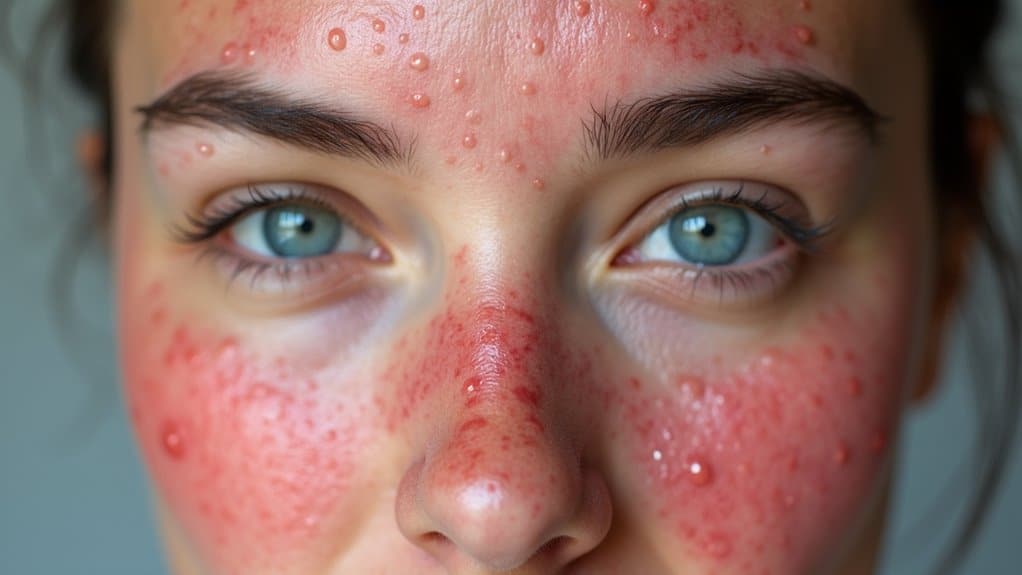
Visible changes in your skin’s temperature and color emerge rapidly after alcohol consumption, primarily due to vasodilation effects throughout your body’s blood vessels. You’ll notice immediate flushing across your face, neck, and upper chest where blood vessels dilate beneath thinner skin layers. If you’re of East Asian descent, you may experience more severe flush reactions due to genetic ALDH2 deficiency. strange alcohol symptoms explained can also include sensations of increased heart rate and warmth. These reactions are often a result of the body’s response to alcohol and can indicate an adverse response in some individuals. Understanding these symptoms is crucial, especially for those who may be at risk for alcohol-related health issues.
With prolonged alcohol use, you’ll observe skin texture degradation, including dryness, flaking, and premature wrinkles. Jaundice and liver dysfunction can cause yellowing of your skin, while vitamin deficiencies may lead to a grayish pallor. If you have rosacea, alcohol consumption will trigger more pronounced inflammation and redness. These changes often accompany increased facial bloating and compromised skin elasticity, particularly affecting areas with delicate tissue.
Coordination and Motor Skills
Beyond skin-level changes, alcohol’s effects rapidly manifest in your body’s motor control systems. Your coordination deteriorates within minutes of drinking, affecting balance, reaction time, and physical precision. You’ll notice declining hand-eye coordination and reduced performance during exercise, even at moderate consumption levels.
What’s particularly concerning is the perceived impairment underestimation that occurs, especially if you’re a frequent drinker. While you might feel capable of performing complex motor tasks, your actual abilities are greatly compromised. This disconnect becomes more pronounced as your blood alcohol content rises, creating a dangerous scenario where your confidence exceeds your capabilities. Motor skills deficits during exercise become more severe due to alcohol-induced dehydration and reduced neuromuscular control, impacting both casual activities and athletic performance.
Memory and Cognitive Function
The most profound effects of alcohol manifest in your brain’s memory and cognitive systems. As you consume alcohol, your diminished cognitive capacities become evident through impaired memory formation and recall. You’ll experience difficulty creating new long-term memories while maintaining short-term recall for minutes.
| Consumption Level | Memory Impact | Cognitive Effects |
|---|---|---|
| Light (<20g/day) | Minor lapses | Minimal decline |
| Moderate | Blackouts | Slower processing |
| Heavy (>36g/day) | Severe loss | Rapid decline |
Chronic drinking leads to long-term neurological damage, particularly in your hippocampus. Your brain’s ability to process and store information deteriorates through mechanisms involving thiamine deficiency and disrupted neurotransmitter systems. You’ll notice progressive impairments across multiple cognitive domains, including executive function, verbal memory, and perceptual speed, potentially accelerating life stage-related cognitive decline.
Breathing and Heart Rate Changes
When you consume alcohol, your respiratory system shifts to rapid, shallow breathing patterns while your sympathetic nervous system activates, increasing heart rate by up to 239%. Your cardiovascular system experiences irregular heart rhythms as alcohol disrupts normal neuromuscular control and blood vessel dilation. Despite these hemodynamic changes, your body initially maintains blood pressure through compensatory mechanisms, though sudden spikes can occur as your system struggles to regulate these alcohol-induced alterations.
Rapid Shallow Breathing Patterns
Consuming alcohol rapidly triggers distinct changes in breathing patterns, characterized by shallow respirations and altered respiratory muscle coordination. You’ll notice your breathing becomes more rapid but less effective, as alcohol’s muscle-relaxing effects impair your respiratory system’s efficiency.
These respiratory distress patterns can markedly impact your oxygen saturation levels, especially if you have pre-existing conditions like sleep apnea or COPD. Your body struggles to maintain proper gas exchange as alcohol depresses your central nervous system and relaxes your upper airway muscles. You’re particularly vulnerable during sleep, when your Apnea-Hypopnea Index may increase to concerning levels up to 7.1 events per hour if you have OSA. The combination of vasodilation, dehydration, and respiratory muscle impairment creates a perfect storm for compromised breathing function.
Irregular Heart Rhythms
Understanding how alcohol disrupts your heart’s electrical system reveals a complex cascade of physiological changes. Your heart’s natural rhythm becomes vulnerable as alcohol alters the electrical signals controlling your heartbeat, leading to irregular blood flow and cardiac output changes.
| Effect | Impact |
|---|---|
| Structural | Fibrosis develops, thinning heart walls |
| Electrical | Reduced refractory periods, slower conduction |
| Autonomic | Increased sympathetic activity, suppressed vagal tone |
| Clinical | Higher arrhythmia risk, AF episode triggers |
When you drink, you’ll experience prolonged P-wave duration and disrupted calcium handling in heart cells. Your autonomic nervous system shifts in the direction of sympathetic dominance, while parasympathetic influence decreases. Even moderate drinking raises your atrial fibrillation risk by 8% per daily drink, while binge drinking creates more severe disruptions to your heart’s electrical patterns.
Blood Pressure Spikes
As alcohol enters your bloodstream, it triggers a complex cascade of cardiovascular changes that affect your blood pressure in a biphasic pattern. You’ll initially experience a temporary drop in blood pressure due to vasodilation, but this quickly reverses into a sustained elevation.
Your body responds with fluid volume retention and sympathetic nervous system dysregulation, causing your blood pressure to spike dramatically. For every drink (12g alcohol), you can expect your systolic pressure to rise by 1.25 mmHg and diastolic by 1.14 mmHg. If you’re male, you’re particularly susceptible to these effects, while females typically show less pronounced responses. With four drinks, these numbers quadruple, potentially leading to dangerous elevations. Regular consumption compounds these effects, creating a cumulative impact that can damage your heart, kidneys, and blood vessels over time.
Digestive System Reactions
The digestive system bears significant impacts from alcohol consumption, with effects ranging from immediate irritation to long-term organ damage. When you drink, alcohol immediately weakens your esophageal sphincter, leading to acid reflux and heartburn. You’ll experience inflammation throughout your digestive tract, from your mouth to your intestines.
Your stomach lining takes a direct hit, as alcohol disrupts protective mucus production and triggers excessive bile release. In your intestines, you’ll develop what’s known as “leaky gut syndrome,” where damaged tight junctions allow toxins to enter your bloodstream. This leads to gut microbiome imbalance and malabsorption of nutrients. The consequences extend beyond digestion, as these disruptions can trigger systemic inflammation and increase your risk of diverse cancers, particularly in the stomach and colon.
Sleep Pattern Disruptions
When you consume alcohol before bed, you’ll experience a deceptive pattern of initial sedation followed by significant sleep architecture disruptions. While you might fall asleep faster, your sleep quality deteriorates as blood alcohol levels change throughout the night, leading to fragmented rest and potential sleep paralysis episodes.
Your body’s natural circadian rhythm disruptions become evident through altered REM sleep patterns and compromised slow-wave sleep. If you’re a chronic drinker, you’ll develop tolerance to alcohol’s sedative effects within 7-10 days, often increasing consumption to achieve the same drowsy state. This adaptation particularly affects your breathing during sleep, worsening conditions like sleep apnea and snoring. During withdrawal or abstinence, you’ll likely experience rebound insomnia and unstable REM patterns, which can persist for months after cessation.
Sometimes it is not a rock bottom moment that wakes you up, it is catching your reflection and barely recognizing the person staring back at you. At Outpatient Detox Tampa, we understand how painful it can be to watch alcohol slowly write itself across your body, from your skin and eyes to your weight and the way you carry yourself, leaving behind signs that are impossible to ignore any longer. We connect you with credible alcohol treatment centers and recovery resources, because seeing those visible changes in yourself or someone you love should never be a moment you face without support. Whether you are just beginning to notice what alcohol is doing to your body or you have known for a while and are finally ready to do something about it, the right help is already out there waiting for you. Call 740-562-7398 today and let us help you take that first step toward healing.
Frequently Asked Questions
How Long Does Alcohol Stay Detectable in Your Fingernails?
Alcohol remains detectable in your fingernails for up to 90 days through EtG biomarkers, though nail growth duration affects detection windows. Your alcohol metabolite levels appear in nail tissue within 1-2 weeks after consumption and continue accumulating as nails grow. You’ll need to provide about 100mg of nail clippings for testing, and detection accuracy depends on your consumption patterns. Heavy drinking shows up more reliably than moderate use.
Can Prescription Medications Affect How Alcohol Shows up in Testing?
Yes, your prescription medications can drastically affect alcohol testing results. Certain medications interact with alcohol and alter your body’s processing of both substances, potentially changing dosage levels in your system. Common medications like albuterol inhalers, acid reflux drugs, and diabetes medications can trigger false positives on breathalyzers. Moreover, some prescriptions like benzodiazepines and antidepressants can heighten alcohol’s effects and impact field sobriety test performance.
Do Energy Drinks Mask the Visible Signs of Alcohol Consumption?
While energy drinks can give you a temporary energy surge and increased heart rate, they don’t effectively mask the visible signs of alcohol intoxication. You’ll still display physical symptoms like slurred speech, poor coordination, and impaired balance. In fact, the combination can be dangerous – you might feel more alert but remain just as impaired. This false sense of sobriety can lead you to make riskier decisions while your actual intoxication level remains unchanged.
Why Do Some People Turn Red Immediately After Drinking Alcohol?
When you drink alcohol, your body’s flushing mechanism activates due to a genetic variation affecting alcohol dehydrogenase activity and ALDH2 enzyme function. If you have this genetic trait, your body can’t efficiently break down acetaldehyde (a toxic byproduct of alcohol metabolism). This buildup triggers vasodilation, causing your blood vessels to dilate rapidly. You’ll experience facial redness, warmth, and possible discomfort almost immediately after consuming alcohol.
Can Coffee or Cold Showers Make Alcohol Leave Your System Faster?
Neither coffee nor cold showers can speed up your body’s alcohol elimination rate. Despite common beliefs, caffeine won’t induce metabolic rate changes that affect alcohol processing, and cold exposure doesn’t trigger liver enzyme induction. Your liver metabolizes alcohol at a fixed rate that can’t be accelerated by external factors. While coffee may make you feel more alert and cold showers might wake you up, they don’t influence how quickly alcohol leaves your system.