


DayQuil’s three active ingredients clear your system at different rates. Acetaminophen and phenylephrine have half-lives of 2-3 hours, meaning they’re largely eliminated within 6-12 hours. Dextromethorphan lingers longest with a 3-6 hour half-life, potentially staying in your system for 24-36 hours. You’ll notice symptom relief diminishing around the 4-6 hour mark as therapeutic levels drop. Factors like liver function, hydration, and other medications you’re taking can considerably, substantially, or markedly affect these timelines.
How Long DayQuil Stays in Your System
Most people assume DayQuil clears the body within hours of symptom relief fading, but detection windows extend well beyond the 4-6 hour therapeutic period. Understanding how long DayQuil stays in your system requires examining each active ingredient’s half-life and your individual metabolism.
When does DayQuil wear off therapeutically? You’ll notice symptom relief diminishing around the 4-6 hour mark. However, how long it takes for DayQuil to wear off completely depends on liver function, hydration, and concurrent medications. Food consumption also influences how quickly your body eliminates the medication from your system.
How long does DayQuil last in detectable amounts? Urine testing identifies components for 1-3 days, while blood samples show presence for 3-24 hours. For those concerned about extended detection, hair tests can identify DXM residue for up to 90 days after use. How long until DayQuil wears off varies considerably, faster metabolizers eliminate ingredients quicker than those with impaired hepatic function. It’s worth noting that dextromethorphan in DayQuil can cause false positives on opioid screens, which may require confirmatory testing to distinguish from actual opioid use.
When Each Active Ingredient Wears Off
Each active ingredient in DayQuil clears your body at a different rate, which affects how long you’ll feel its effects. Acetaminophen fades first with a half-life of 2-3 hours, while dextromethorphan lingers longest at 3-6 hours depending on your metabolism. Phenylephrine clears quickly with a 2-3 hour half-life, meaning its decongestant effects wear off faster than the other ingredients. The non-drowsy formula allows you to continue with daily activities while these ingredients work through your system. To avoid severe liver damage, do not take more than 8 LiquiCaps in 24 hours when using products containing acetaminophen. If symptoms get worse or last more than 7 days in adults, stop use and ask a doctor.
Acetaminophen Fades First
Because acetaminophen has the shortest half-life of DayQuil’s active ingredients, its pain and fever relief fades first, typically within 4-6 hours after your dose. Peak plasma concentration occurs around 30 minutes to 1 hour post-ingestion, with a half-life of 2-3 hours in healthy adults.
Your liver handles acetaminophen metabolism by converting it into NAPQI, a compound neutralized by glutathione when you stay within safe doses. However, exceeding 4,000 mg daily overwhelms this protective mechanism and risks liver damage. Alcohol consumption causes glutathione levels to drop, allowing NAPQI to accumulate and damage liver cells more readily. Since each DayQuil LiquiCaps dose contains 650 mg acetaminophen, tracking your total daily intake becomes essential when combining with other medications.
Individual factors affect how quickly you’ll notice acetaminophen’s effects diminishing. Age, liver function, and overall metabolic rate all play roles. Hydration status also influences how efficiently your body processes and eliminates the medication. Watch for warning signs like jaundice or abdominal pain if you’ve been taking multiple doses, these indicate potential liver stress from acetaminophen overuse.
Dextromethorphan Lasts Longest
Dextromethorphan takes longer to clear out of your system than acetaminophen, with a half-life of 3-4 hours in most people. A standard 30 mL dose of DayQuil liquid contains 20 mg of dextromethorphan. Effects typically begin within 30-60 minutes, peak at 2-4 hours, and provide relief for up to 6 hours.
Your body clears most dextromethorphan within 6-8 hours, though complete elimination takes 1-2 days. If you’re a poor CYP2D6 metabolizer, clearance can extend to 4-5 days. Detection windows vary by test type: urine shows traces up to 48 hours, blood for 1-2 days, and saliva for 2-3 days. While dextromethorphan doesn’t appear on standard drug panels, it may trigger false positives for PCP on some screening tests.
Factors like liver function, hydration, and dose size directly affect how long dextromethorphan remains active in your system. Certain medications may speed up or slow down dextromethorphan metabolism through drug interactions, further altering your clearance time.
Phenylephrine Clears Quickly
How quickly does phenylephrine leave your body compared to DayQuil’s other ingredients? Phenylephrine clears faster than both acetaminophen and dextromethorphan, with an elimination half-life of just 2 to 3 hours.
Your body processes phenylephrine primarily through your kidneys. Within 48 hours, you’ll excrete over 80% of the dose in your urine. About 57% converts to inactive meta-hydroxymandelic acid, while only 2.6% leaves your system unchanged. Phenylephrine undergoes first-pass metabolism in the gut wall and liver before reaching systemic circulation.
Full plasma clearance of phenylephrine typically occurs within 16.5 to 17 hours, though you’ll stop feeling its decongestant effects much sooner, usually within 4 to 6 hours after dosing. Your metabolism rate, hydration levels, kidney function, and whether you’ve eaten can all influence how quickly you clear this ingredient. Healthy kidney function is essential for efficient phenylephrine elimination.
What Speeds Up or Slows Down DayQuil Clearance
Why does DayQuil clear faster in some people than others? Your liver and kidney function directly determine dayquil duration. A healthy liver processes acetaminophen with a 2-3 hour half-life, while impaired function considerably delays elimination. Renal impairment can extend phenylephrine’s half-life to 6-8 hours. Consuming 3 or more alcoholic drinks daily while using DayQuil can cause severe liver damage and significantly impair your body’s ability to process the medication.
Hydration status matters markedly. Adequate fluid intake, 2-3 liters daily, accelerates urinary excretion of phenylephrine and guaifenesin metabolites. Dehydration slows kidney filtration, prolonging dextromethorphan presence.
Your dosing interval affects accumulation risk. When you take doses too close together, ingredients build up faster than your body eliminates them. Body weight under 50kg extends acetaminophen’s half-life by 20-30%, while elderly individuals experience 25% slower phenylephrine metabolism.
Drug interactions also alter clearance. CYP2D6 inhibitors slow dextromethorphan elimination by 50-100%, and MAOIs can prolong effects for weeks.
Overdose Risks and Warning Signs to Watch For

Exceeding DayQuil’s maximum daily dose, particularly the 3,000mg acetaminophen limit, puts you at risk for liver damage, which may present as nausea, upper abdominal pain, or yellowing skin days after exposure. If you’re taking medications that affect serotonin levels, combining them with dextromethorphan can trigger serotonin syndrome, marked by rapid heart rate, agitation, and muscle rigidity. Recognizing these warning signs early allows you to seek medical attention before symptoms escalate.
Liver Damage Warning Signs
Because acetaminophen toxicity can develop silently before symptoms appear, you’ll want to recognize the early warning signs that signal potential liver damage. Among DayQuil active ingredients, acetaminophen poses the greatest hepatotoxicity risk when you exceed 4 grams daily or consume three or more alcoholic drinks while using the medication.
Early symptoms include nausea, vomiting, loss of appetite, and upper right abdominal pain. These may progress to jaundice, dark urine, and confusion as liver function deteriorates.
Your risk escalates when you combine DayQuil with other acetaminophen-containing products without checking labels. Since each LiquiCap contains 325 mg acetaminophen, taking the maximum four doses delivers 2,600 mg daily, leaving little margin if you’re using additional medications. Seek immediate medical attention if you suspect acetaminophen overdose, even before symptoms manifest.
Serotonin Syndrome Symptoms
While acetaminophen threatens your liver, dextromethorphan, DayQuil’s cough suppressant, poses a different danger: serotonin syndrome. This condition occurs when excessive serotonin accumulates in your brain, creating a medical emergency.
Dextromethorphan acts as a serotonin reuptake inhibitor. If you’re taking MAO inhibitors, you must avoid DayQuil entirely, the combination can trigger dangerous serotonin levels. Wait at least two weeks after stopping MAO-i medications before using dextromethorphan products.
Watch for early warning signs: rapid heart rate, excessive sweating, muscle stiffness, confusion, and agitation. These symptoms can escalate quickly to high fever, severe muscle spasms, tremors, and seizures. In critical cases, coma becomes possible.
If you experience any symptoms, seek immediate medical care. Don’t dismiss unusual reactions, serotonin syndrome progresses rapidly and often requires hospitalization for treatment.
Maximum Daily Dose Limits
Maximum Daily Dose Limits (Overdose Risks and Warning Signs to Watch For)
DayQuil’s maximum daily dose depends on the specific formulation you’re using, but all versions share one critical limit: don’t exceed 4 doses in 24 hours. Exceeding this threshold drastically increases your risk of acetaminophen-induced liver damage.
| Formulation | Maximum Daily Amount |
|---|---|
| LiquiCaps | 8 capsules |
| Liquid (Adult) | 120 mL |
| DayQuil SEVERE | 120 mL |
| Children’s (6-11) | 60 mL |
| Children’s (12+) | 120 mL |
Your total acetaminophen intake shouldn’t exceed 4,000 mg daily across all medications. If you consume three or more alcoholic drinks daily, liver damage risk increases enormously. Those with hepatic dysfunction should use extra caution or avoid DayQuil entirely, as pre-existing liver conditions compound the risks of acetaminophen toxicity. Watch for warning signs including unusual fatigue, abdominal pain, or yellowing skin. Combining DayQuil with other acetaminophen-containing products creates dangerous overlap that’s easy to miss. Your total acetaminophen intake should never exceed 4,000 mg per day across all medications, as exceeding this threshold significantly raises the risk of liver toxicity, especially if you consume three or more alcoholic drinks daily. Individuals with hepatic dysfunction should exercise extreme caution or avoid products like dayquil at night, since pre-existing liver impairment compounds acetaminophen-related risks. Be alert for warning signs such as unusual fatigue, upper abdominal pain, or yellowing of the skin, and avoid combining DayQuil with other acetaminophen-containing products to prevent accidental overdose.
When to Take Your Next Dose or Switch to NyQuil
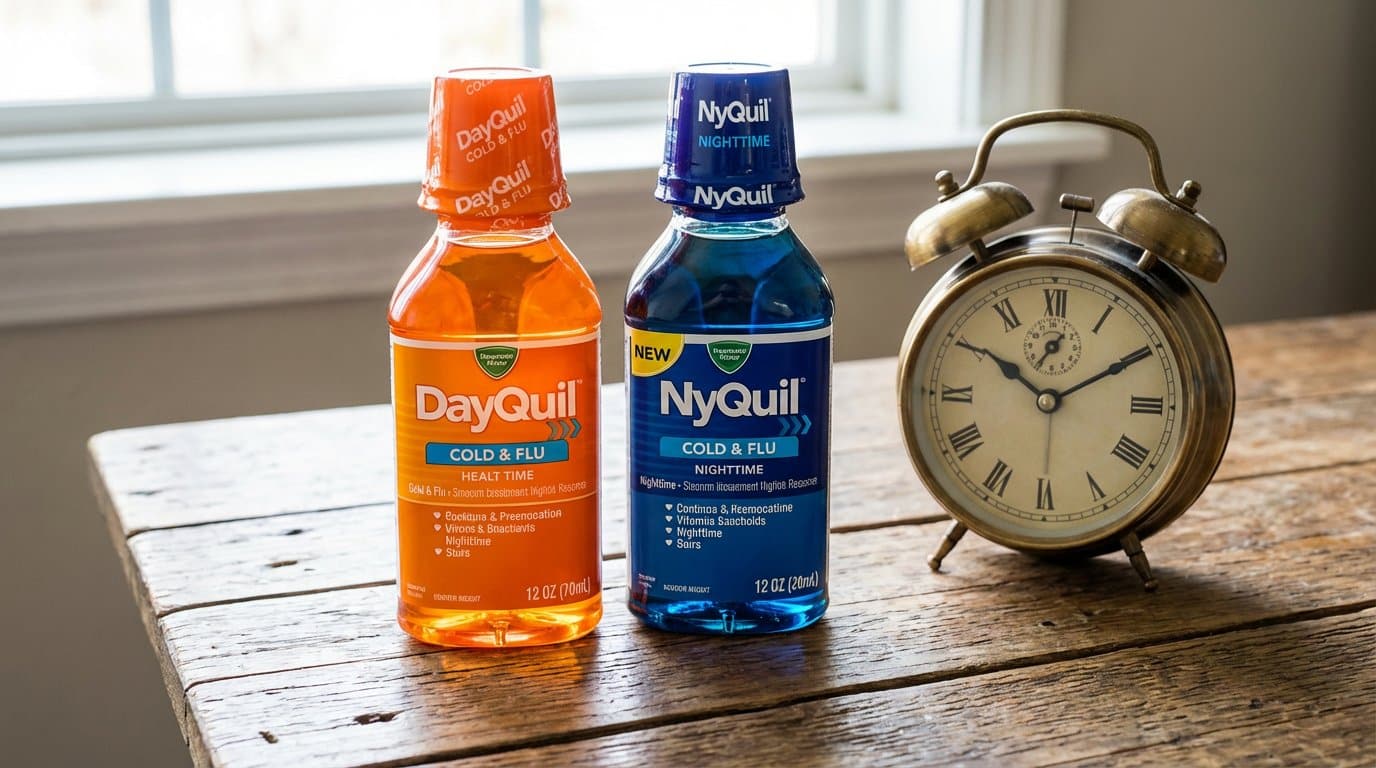
How soon can you safely take another dose of DayQuil or switch to NyQuil at bedtime? You should wait 4-6 hours between DayQuil doses, with a maximum of 4 doses in 24 hours. When switching to NyQuil, verify you haven’t exceeded the combined acetaminophen limit of 4000 mg daily.
Key timing guidelines:
- Space DayQuil doses every 4-6 hours
- Don’t exceed 4 doses within 24 hours
- Switch to NyQuil only at bedtime due to drowsiness effects
- Track total acetaminophen intake across both products
- Avoid duplicating decongestants or cough suppressants
Both products contain overlapping active ingredients. Check labels carefully to prevent accidental double-dosing of acetaminophen, dextromethorphan, or phenylephrine. The WHO ATC classification system categorizes these drugs based on their organ/system effects, chemical properties, and therapeutic uses, helping identify potential overlaps. If you’re uncertain about safe timing or combined use duration, consult your pharmacist before taking your next dose.
Why DayQuil’s Effects Fade After 4, 6 Hours
The 4, 6 hour dosing interval for DayQuil reflects how quickly its active ingredients drop below therapeutic levels in your bloodstream. Acetaminophen’s half-life of 1, 4 hours means pain and fever relief diminishes relatively fast. Phenylephrine clears within approximately 16.5 hours total, but its decongestant effects weaken well before complete elimination.
Dextromethorphan presents the widest variability. With a half-life of 3, 6 hours in typical metabolizers, cough suppression fades as plasma concentrations decline. However, your CYP2D6 enzyme function determines whether you’re on the faster or slower end of that range.
You’ll notice symptom relief waning before the ingredients fully leave your system. This gap explains why you might feel congestion returning while traces remain detectable. The dosing schedule targets sustained symptom control, not complete elimination between doses. Unlike NyQuil, DayQuil is formulated without drowsiness-inducing antihistamines, allowing you to maintain alertness while managing symptoms throughout the day.
Ready to Break Free? Help Is Just One Call Away
Addiction doesn’t have to be the end of your story. At Tampa Outpatient Detox, we connect you with dedicated treatment providers who genuinely believe in your ability to heal. The life you want is still possible, and it starts with one Call (740) 562-7398.
Frequently Asked Questions
Can I Drink Alcohol After Dayquil Wears off Completely?
You can drink alcohol after DayQuil fully clears your system, but you’ll want to wait at least 24 hours after your last dose. Acetaminophen and alcohol together stress your liver, while dextromethorphan combined with alcohol increases sedation and impairment risks. Phenylephrine can also raise blood pressure, which alcohol may worsen. If you’ve taken multiple doses throughout the day, the clearance window extends. Consult your healthcare provider for personalized guidance.
Will Dayquil Show up on a Workplace Drug Test?
DayQuil won’t show up on standard workplace drug tests. These panels screen for illicit substances like amphetamines, cocaine, marijuana, and opiates, not acetaminophen, dextromethorphan, or phenylephrine. The ingredients clear your system within 24-48 hours anyway. While rare reports exist of high-dose dextromethorphan triggering initial PCP flags, confirmation testing (GC-MS) quickly rules out false positives. You shouldn’t worry about failing a drug test from taking DayQuil as directed.
Is It Safe to Take Dayquil While Breastfeeding?
DayQuil’s safety during breastfeeding depends on its ingredients. Acetaminophen and dextromethorphan are generally considered compatible with breastfeeding, showing minimal transfer to breast milk. However, phenylephrine raises concerns, it may reduce your milk supply, and limited data exists on its effects during lactation. You should consult your healthcare provider before taking DayQuil while nursing. They might recommend single-ingredient alternatives that avoid the decongestant component altogether.
Can I Take Dayquil With My Prescription Antidepressant Medication?
You should consult your doctor or pharmacist before combining DayQuil with your antidepressant. DayQuil contains dextromethorphan, which can interact with serotonergic antidepressants and cause serotonin syndrome, a potentially serious condition with symptoms like rapid heart rate, sweating, muscle stiffness, and confusion. If you’re taking MAOIs, you must avoid DayQuil entirely. Don’t combine these medications without professional guidance, as the interaction risks depend on your specific antidepressant type and dosage.
Does Dayquil Interact With Coffee or Other Caffeinated Drinks?
DayQuil’s phenylephrine and caffeine can both stimulate your cardiovascular system, potentially increasing heart rate or blood pressure when combined. While there’s no absolute contraindication, you should monitor how you feel if you drink coffee while taking DayQuil. If you experience jitters, rapid heartbeat, or anxiety, cut back on caffeine until DayQuil clears your system. You’ll want to stay hydrated and avoid excessive caffeine intake during treatment.